

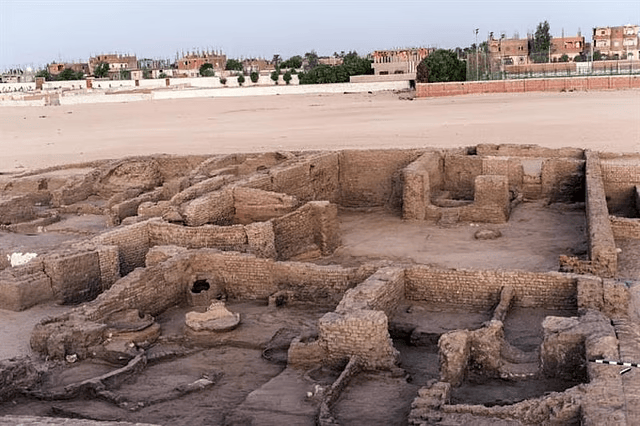
18th-century city and Byzantine necropolis uncovered in Egypt
Archaeologists have made an extraordinary discovery in Egypt, uncovering the remains of an 18th-century city alongside a Byzantine-era necropolis. This significant find offers new insights into the region’s long and complex history, showcasing how civilizations evolved and coexisted over centuries.
The 18th-century city is believed to have been a thriving urban settlement, featuring well-planned streets, residential structures, and evidence of daily life such as pottery, tools, and architectural remains. These findings suggest the city played an important role in regional trade and administration during that period. Researchers note that the urban layout reflects advanced planning and cultural influences unique to the era.
Beneath and around the city, archaeologists also uncovered a Byzantine necropolis dating back more than a thousand years earlier. The burial ground includes stone tombs, human remains, and funerary artifacts such as crosses and inscriptions, indicating Christian burial practices common during the Byzantine period. This discovery highlights the religious and cultural diversity that once existed in the region.
Experts say the coexistence of an 18th-century settlement and a Byzantine necropolis at the same site demonstrates how later civilizations often built over or near older ones, preserving layers of history beneath the surface. The findings help historians better understand patterns of settlement, migration, and religious transformation in Egypt.
Egypt’s Ministry of Antiquities has emphasized that this discovery strengthens the country’s status as one of the world’s richest archaeological landscapes. Further excavations and studies are planned, which may reveal additional artifacts and structures. Once research is complete, the site could become an important destination for cultural tourism, offering visitors a rare glimpse into multiple historical eras in one location.