

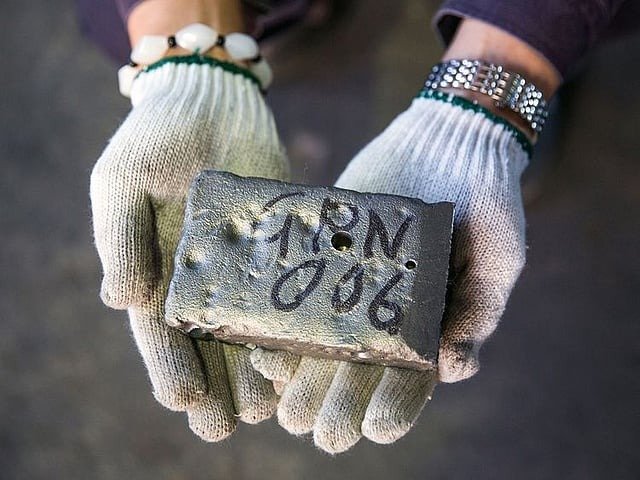
China Tightens Rare Earth Export Controls Amid Global Tensions
<p>China has announced a fresh round of export controls on its rare-earth industry, further tightening its grip on one of the most strategically significant sectors in the global economy. The move underscores Beijing’s growing focus on protecting its technological advantage and national security, even as it deepens tensions with major trading partners like the United States and the European Union.</p><p>The Ministry of Commerce stated on Thursday that exporters must now obtain special permits for technologies used in rare-earth mining, smelting, and processing. These restrictions, which took immediate effect, also cover activities such as the “assembly, adjusting, maintenance, repair, and upgrading of production lines.” The latest controls add to existing regulations that already require export licenses for several types of rare-earth materials.</p><p>According to the ministry, the new measures are aimed at preventing the transfer of critical technologies and materials that could be used in sensitive military or strategic applications. Officials emphasized that some foreign entities have previously diverted Chinese-origin rare-earth items for military use, posing what Beijing described as “significant threats” to its national security and global stability.</p><p>Exporters will now need to apply for official permits before making certain shipments, and applications destined for overseas military users will not be approved. Additionally, foreign firms attempting to re-export or process Chinese rare-earth materials outside the country will face tighter scrutiny.</p><h3><strong>A Strategic Resource with Global Impact</strong></h3><p>Rare earths — a group of 17 metallic elements — are essential for manufacturing high-performance magnets used in electric vehicles, wind turbines, smartphones, and advanced defense systems. China dominates this market, accounting for more than 60% of global production and an even higher share of processing capacity. This control gives Beijing substantial leverage in global trade and manufacturing supply chains.</p><p>The United States Geological Survey (USGS) estimates that the world’s total rare-earth reserves stand at around 110 million tonnes, with 44 million tonnes located in China. Other significant deposits are found in Brazil, Vietnam, Russia, and India. However, despite having reserves, many nations remain dependent on China for refining and processing — a technically complex and environmentally challenging process that China has mastered over decades.</p><p>Beijing’s vast investments in refining operations have come with less stringent environmental rules compared to Western countries, allowing it to develop a cost advantage. Furthermore, China’s dominance in patent filings for rare-earth production technologies makes it difficult for international competitors to establish large-scale operations.</p><h3><strong>Economic and Geopolitical Ripples</strong></h3><p>The new export restrictions are likely to create further disruptions for global industries already struggling with supply chain bottlenecks. From electronics and automotive sectors to clean energy manufacturers, companies are bracing for potential shortages and higher costs. Some firms have even faced temporary production halts as rare-earth supplies tighten.</p><p>In Washington, the move is likely to be viewed as a calculated response to U.S. efforts to curb China’s access to advanced semiconductor technologies. Rare earths have long been a flashpoint in U.S.-China trade relations, with Washington accusing Beijing of using its dominance as a geopolitical weapon. The new Chinese measures could intensify calls in Western capitals to diversify supply chains and invest in domestic rare-earth projects.</p><h3><strong>Global Reactions and the Race for Alternatives</strong></h3><p>The European Union and the United States have both launched initiatives to reduce their dependence on China for critical minerals. In July, European Commission President Ursula von der Leyen said after a meeting in Beijing that both sides had agreed on improving export mechanisms. However, European business groups warned that companies still face serious challenges in securing access to key materials.</p><p>Meanwhile, nations like India, Japan, Saudi Arabia, and the U.S. are ramping up exploration and joint investments in rare-earth projects. India’s ambitious plans have drawn interest from industrial giants such as Vedanta and JSW Group, while Apple has committed to purchasing $500 million worth of rare earths from a U.S. producer backed by the Pentagon.</p><h3><strong>The Road Ahead</strong></h3><p>China’s latest policy signals a broader strategy of using its dominance in critical minerals as leverage in global trade negotiations. While Beijing frames these actions as necessary for national security, analysts see them as part of a calculated economic and geopolitical play.</p><p>For now, China remains the linchpin of the global rare-earth industry. But as nations scramble to secure alternative sources and develop domestic capabilities, the world is likely to see a new chapter unfold in the ongoing battle for control over critical materials — a contest that could shape the future of technology, defense, and clean energy for decades to come.</p>