

Delhi Red Fort Blast: 13 Dead as Police Invoke Terror Law, PM Modi Calls It ‘Conspiracy’
Delhi Red Fort Car Blast: Terror Law Invoked After Deadly Explosion Leaves 13 Dead
A powerful explosion near Delhi’s Red Fort Metro Station on Monday evening, November 10, 2025, has left 13 people dead and many others seriously injured, prompting nationwide shock and heightened security. Authorities have now invoked the Unlawful Activities (Prevention) Act (UAPA), treating the tragedy as a terror attack. Prime Minister Narendra Modi called the explosion a “conspiracy”, assuring the public that the culprits will face justice.
What Happened at Red Fort
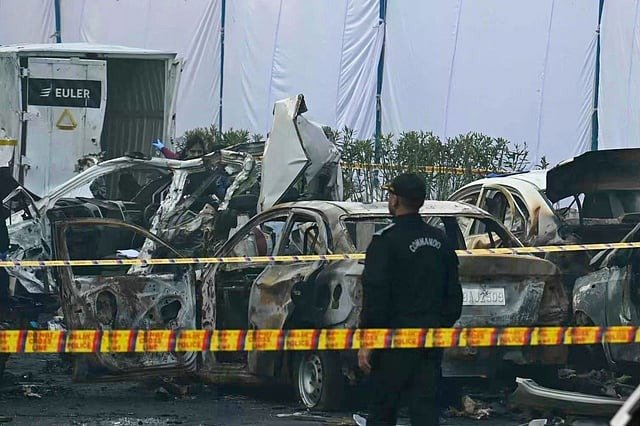
At around 6:30 p.m., a white Hyundai i20 car stopped at a red light near Gate No. 1 of the Red Fort Metro Station and suddenly exploded, setting nearby vehicles ablaze and sending thick smoke into the air. Eyewitnesses described scenes of chaos and horror, with flames engulfing multiple cars and body parts scattered across the road.
“I saw flames from my house, and windows shook violently,” said a local resident. “People were screaming and running for their lives. It was terrifying.”
Emergency services rushed to the scene, with 25 fire engines and multiple ambulances deployed. The fire was eventually brought under control, but the scale of devastation stunned the capital.
Casualties and Victims
According to officials, 13 people lost their lives, including both locals and migrants from Uttar Pradesh and Uttarakhand, while more than 25 were injured. Most of the victims were taken to Lok Nayak Jai Prakash (LNJP) Hospital, just a few kilometres from the site.
Among the victims was 21-year-old Shivam Jha from Delhi, Ashok Kumar from Amroha, and Mohsin from Meerut. Several bodies were burnt beyond recognition, making identification difficult for forensic teams.
Investigation and Arrests
The Delhi Police have confirmed that the explosion was caused by a high-intensity improvised explosive device (IED), reportedly made with ammonium nitrate and RDX. Investigators believe it was a suicide attack linked to a terror module busted in Faridabad, where authorities had earlier seized 2,900 kg of bomb-making chemicals.
The suspect, identified as Dr. Umar Mohammad, a resident of Pulwama, is alleged to have driven the car. Intelligence sources suggest that the attackers panicked during handling explosives, which may have triggered a premature blast.
Multiple raids have been conducted across Delhi, Haryana, and Uttar Pradesh, leading to the detention of several suspects, including three doctors from Al Falah University. The investigation has since been handed over to the National Investigation Agency (NIA), which is probing links to the Jaish-e-Mohammad (JeM) terror group.
A 500-member task force comprising officers from the NIA, NSG, IB, and Delhi Police Special Cell has been formed to investigate all aspects of the attack, including the purchase and movement of the vehicle involved.
PM Modi and Amit Shah Respond
While addressing an event during his Bhutan visit, Prime Minister Narendra Modi described the explosion as a “conspiracy” and vowed to bring all those responsible to justice.
Home Minister Amit Shah convened a high-level security review with senior officials, including NSA Ajit Doval, and ordered enhanced security across the country. “We are investigating from all angles,” Shah said, adding that the use of advanced explosives points toward an organized terror plan.
Nationwide Security Alert
Following the attack, India has gone on high alert. Security has been tightened at airports, metro stations, railway terminals, and government buildings. The Delhi Metro Rail Corporation (DMRC) announced that Lal Quila Metro Station will remain closed temporarily as a precaution.
States like Uttar Pradesh, Haryana, Maharashtra, and Kerala have been placed on red alert, with orders for strict vehicle checks, increased patrols, and enhanced surveillance near historical and religious sites.
The Central Industrial Security Force (CISF) also issued directives to strengthen security at sensitive locations, including the Indira Gandhi International Airport.
International Reactions
The UAE strongly condemned the attack, calling it a “cowardly act of terror” and expressing condolences to the victims and their families. The UK and US embassies have also issued travel advisories urging citizens to avoid crowded areas in Delhi and follow local authorities’ guidance.
Early Clues and Evidence
CCTV footage recovered from over 100 cameras shows the suspect’s car entering the area around 3:15 p.m. and remaining parked for nearly three hours near a mosque before driving toward Netaji Subhash Marg, where it exploded.
Police have traced the car’s registration to Haryana, and the previous owner has been detained. Investigators suspect the vehicle changed hands multiple times using fake documents to conceal its trail.
Aftermath and Public Response
The blast caused panic in Chandni Chowk, one of Delhi’s busiest markets. Shopkeepers shut down stores as crowds fled in fear. The market remained closed the following day as forensic teams combed through debris for clues.
Leaders across political parties have condemned the attack. Former Delhi Chief Minister Arvind Kejriwal called it “extremely alarming,” demanding accountability and improved capital security.
Conclusion
The Red Fort car blast marks one of the deadliest attacks in Delhi in recent years. As the NIA and Delhi Police dig deeper, the focus remains on dismantling the wider network behind the explosion.
With terror laws now invoked, and high-level coordination between intelligence agencies, India has reinforced its resolve to confront threats against national security. Prime Minister Modi’s statement sums up the nation’s mood:
“This is a conspiracy against India’s peace and unity. Those responsible will not be spared.”