

Gas Explosion Rocks Pakistan Supreme Court, Injures 12
Gas Blast at Pakistan’s Supreme Court Injures 12, Triggers Security Lockdown
Islamabad, November 4, 2025 — A sudden gas explosion at Pakistan’s Supreme Court building shook the capital on Tuesday morning, leaving twelve people injured and prompting a swift emergency response at one of the nation’s most secure judicial facilities. The incident occurred in the basement cafeteria around 10:55 a.m., causing panic among staff and visitors as parts of the building trembled from the blast.
According to Islamabad Inspector General of Police, Syed Ali Nasir Rizvi, the explosion originated from the canteen located on the lower level of the court complex. Of the twelve injured, two individuals sustained critical wounds and were rushed to the Pakistan Institute of Medical Sciences (PIMS) for urgent treatment. The remaining victims were treated for burns and minor injuries at nearby hospitals.
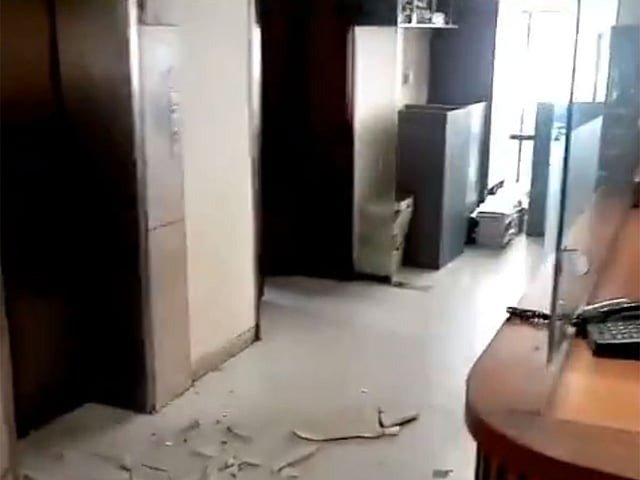
Eyewitnesses described scenes of chaos and confusion as thick smoke filled the hallways, forcing people to evacuate the premises. “We heard a loud explosion followed by vibrations across the building,” said one staff member who was present near Courtroom No. 6. “Ceiling panels collapsed, and debris was scattered everywhere.”
Local media reports confirmed that parts of the multi-story building sustained structural damage, particularly in the basement and adjacent areas. In Courtroom No. 6, portions of the ceiling reportedly gave way after the explosion, though no court sessions were in progress at the time.
Immediate Response and Investigation
Emergency services, including police, rescue teams, and the bomb disposal squad, reached the site within minutes. The area was quickly cordoned off, and all judicial proceedings were suspended for the day as authorities ensured the safety of the premises.
High-ranking officials — including DIG Security Muhammad Atiq Tahir and SSP Operations Muhammad Shoaib Khan — joined IG Rizvi at the scene to oversee rescue operations and assess security arrangements. “Our priority is to secure the area and determine the cause of the explosion,” IG Rizvi told reporters.
Initial assessments suggest that the blast was likely caused by a gas leak in the basement cafeteria, although forensic teams are conducting a thorough investigation to rule out any foul play. The Criminal Investigation Agency (CIA) and the Forensic Science Unit have collected samples from the site for analysis.
Security Concerns and Broader Implications
The Supreme Court of Pakistan is considered one of the most sensitive and heavily guarded institutions in the country. The fact that such an incident occurred within its premises has raised serious questions about safety protocols and infrastructure maintenance in high-security buildings.
In recent years, Islamabad has seen a tightening of security measures around government installations, particularly in the Red Zone, which houses major institutions such as the Parliament, the Prime Minister’s Office, and the Supreme Court. Despite these precautions, Tuesday’s explosion has reignited concerns over safety lapses in public buildings.
Experts have pointed out that poor gas maintenance systems and aging infrastructure often contribute to such incidents. “Regular safety audits are essential, especially in government complexes where thousands of people work daily,” said a safety engineer familiar with Islamabad’s public sector buildings.
Government Reaction
Officials from the Ministry of Interior have called for a comprehensive safety review of all federal buildings in the capital. Meanwhile, Chief Justice Qazi Faez Isa has reportedly been briefed on the situation and directed authorities to ensure that court operations resume only after the building is fully cleared and secured.
As of the latest updates, the injured victims remain under medical supervision, and police teams continue to inspect the premises. While early reports indicate that the explosion was accidental, authorities have not ruled out the possibility of sabotage until forensic results are confirmed.
Conclusion
The explosion at Pakistan’s Supreme Court has not only disrupted judicial activity but also exposed vulnerabilities in the safety systems of key government institutions. As investigations continue, officials are under pressure to enhance preventive measures, ensuring such an incident never occurs again.
For now, Islamabad remains on alert, and citizens are awaiting answers about what caused the blast that shook one of the country’s most secure buildings.