

Moderate Earthquake Jolts Afghanistan, Renewing Seismic Concerns
A magnitude 4.3 earthquake struck Afghanistan in the early hours of Wednesday, once again drawing attention to the country’s ongoing vulnerability to seismic activity. The tremor was recorded by the National Centre for Seismology (NCS) and occurred in the north-eastern region of the country, not far from the capital, Kabul.
According to the NCS, the earthquake occurred at 12:30 am IST on December 10, 2025, with its epicentre located at latitude 36.39 North and longitude 70.88 East. The quake was recorded at a depth of 150 kilometres, classifying it as a deep-focus earthquake. While deeper quakes generally cause less surface damage than shallow ones, they are often felt across a wider area and can contribute to continued instability below the Earth’s surface.
In a statement shared on social media platform X, the NCS confirmed the details, noting the timing, magnitude, depth, and location of the quake. As of now, there have been no immediate reports of casualties or damage, though assessments in remote mountainous regions often take time due to difficult terrain and limited infrastructure.
This latest earthquake follows a series of recent tremors recorded in Afghanistan over the past several days, suggesting ongoing seismic unrest in the region. On December 9, the NCS reported a magnitude 4.5 earthquake that struck at a shallow depth of just 10 kilometres around 1:17 pm, a level that typically increases the potential for damage. Another tremor was recorded the same day at 2:36 pm, with a depth of 70 kilometres, which can raise the likelihood of aftershocks.
Experts note that shallow earthquakes are usually more dangerous because seismic waves reach the surface more rapidly, leading to stronger ground shaking and greater risk to life and property. While the 4.3-magnitude quake registered at a deeper level, its occurrence adds to concerns about a pattern of repeated seismic activity.
Afghanistan lies within one of the most seismically active regions in the world, particularly along the Hindu Kush mountain range, where earthquakes occur frequently. According to the Red Cross, the country experiences dozens of tremors each year, many of which go unnoticed, while others cause widespread destruction due to fragile infrastructure and vulnerable communities.
The country’s geological instability stems from its location along the collision zone between the Indian and Eurasian tectonic plates. This ongoing tectonic pressure creates numerous active fault lines across Afghanistan, increasing the risk of earthquakes. A significant fault line also passes through the western province of Herat, which has been the site of devastating earthquakes in the past.
Just last month, on November 4, a powerful 6.3-magnitude earthquake struck northern Afghanistan, leaving at least 27 people dead and more than 950 injured, according to local officials. The powerful tremor caused widespread damage and reportedly affected one of the country’s most historic mosques. Many families were jolted awake as the earthquake struck near Mazar-i-Sharif at a relatively shallow depth of 28 kilometres, according to the United States Geological Survey (USGS).
Humanitarian agencies warn that Afghanistan remains extremely vulnerable to natural disasters, including earthquakes, landslides, flash floods, and seasonal flooding. The United Nations Office for the Coordination of Humanitarian Affairs (UNOCHA) has repeatedly highlighted the country’s limited disaster preparedness and response capacity, particularly in rural and mountainous communities.
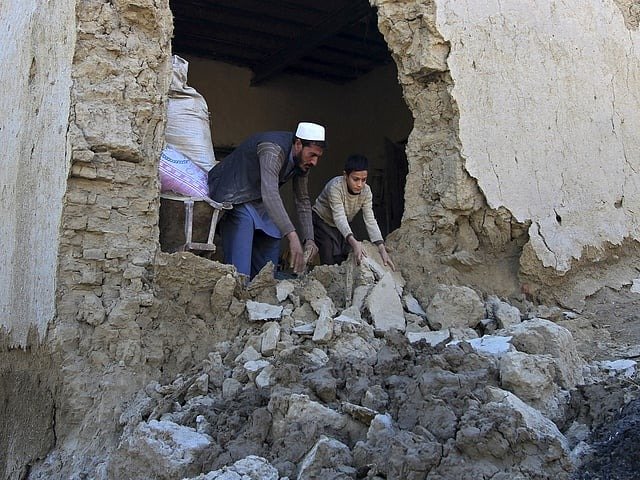
Repeated seismic events place immense strain on communities already struggling with decades of conflict, poverty, and underdevelopment. Many homes are built with weak materials, making them highly susceptible to collapse during even moderate earthquakes. Limited access to emergency services, healthcare, and safe shelters further amplifies the risks faced by residents.
Experts stress the importance of improving early warning systems, strengthening building standards, and expanding public awareness about earthquake preparedness. However, prolonged instability and resource shortages have slowed progress in disaster risk reduction.
While the latest 4.3-magnitude earthquake may not have caused immediate devastation, it serves as a stark reminder of Afghanistan’s ongoing exposure to seismic hazards. With continued tremors expected in the region, the need for preparedness, resilience-building, and international support remains critical to protecting lives and livelihoods.