

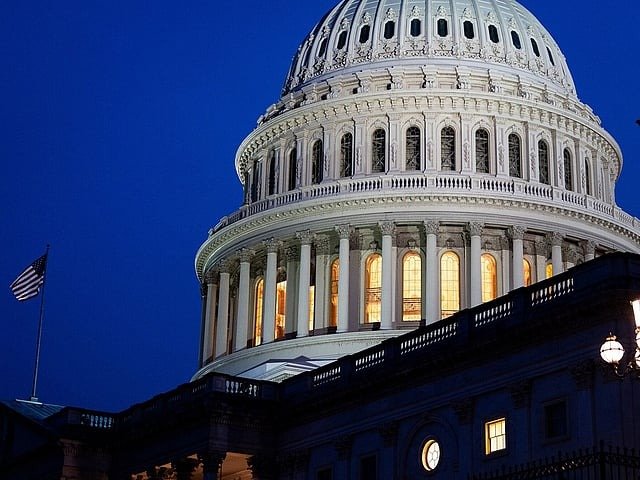
US Government Shuts Down as Congress Deadlocks on Funding Deal
The United States government officially entered a shutdown at 12:01 a.m. Wednesday, following a dramatic breakdown in budget negotiations between Congress and the White House. The failure to pass a temporary funding measure has halted operations across multiple federal agencies, leaving hundreds of thousands of government workers uncertain about their future.
The shutdown marks the first since the record-breaking 35-day standoff nearly seven years ago and underscores the deepening political polarization in Washington. At the center of the impasse are Democratic demands for increased health care funding and Republican resistance to restoring spending levels cut earlier in President Donald Trump’s second term.
Trump Blames Democrats
In remarks from the Oval Office, President Trump placed responsibility squarely on Democrats, accusing them of holding the federal budget hostage for partisan priorities. He warned that the shutdown would not only continue until Democrats relented but also hinted at retaliatory measures.
“We’d be laying off a lot of people that are going to be very affected. And they’re Democrats, they’re going to be Democrats,” Trump told reporters. He added that “a lot of good can come down from shutdowns” and suggested the pause would give his administration a chance to “get rid of a lot of things we didn’t want — and they’d be Democrat things.”
The president’s sharp rhetoric has heightened anxieties among federal workers, who were already unsettled by sweeping layoffs earlier this year under the newly created Department of Government Efficiency, overseen by business magnate Elon Musk.
Democrats Demand Health Care Funding
The budget stalemate largely stems from Democratic efforts to restore billions in funding for health care programs, particularly the Affordable Care Act (Obamacare) subsidies for low-income families. Trump and congressional Republicans have moved to dismantle those programs, arguing they are too costly and inefficient.
While Republicans pushed a short-term stopgap measure to extend government funding through late November, Democrats voted almost unanimously against the proposal, insisting that any temporary deal must include commitments to preserve health care spending.
“The American people deserve better than stopgap politics,” one Democratic senator said, emphasizing that millions could lose coverage if cuts continue.
Impact of the Shutdown
The immediate effects of the shutdown are already rippling across the country. According to the Congressional Budget Office (CBO), as many as 750,000 federal workers could be furloughed without pay each day. Others classified as essential — including members of the military, Transportation Security Administration officers, and Border Patrol agents — will continue to work but without pay until the shutdown ends.
Core services such as the Postal Service, Social Security, and food stamps will remain operational, but many nonessential functions, from federal museum operations to national park maintenance, will be suspended. Local economies dependent on tourism and government contracts are bracing for immediate losses.
Political Standoff in Congress
The Senate requires 60 votes to pass a spending bill, meaning bipartisan cooperation is essential. Republicans currently fall short of that threshold, giving Democrats rare leverage despite being in the minority in both chambers.
Talks at the White House earlier this week offered a glimmer of hope, but the negotiations collapsed amid entrenched disagreements. With the House of Representatives in recess for the week and the Senate set to break briefly for the Jewish holiday Yom Kippur, lawmakers are not expected to revisit the issue until Friday at the earliest.
That delay all but ensures the shutdown will extend for several days, if not weeks. Some analysts warn that if the standoff drags on, it could have broader implications for the global economy, shaking investor confidence and potentially slowing US growth.
A Familiar Crisis
Government shutdowns are not new to Washington. Since 1976, when the modern budget process was enacted, the federal government has closed 21 times. Many of those shutdowns lasted only hours or days, causing minimal disruption. But the 2018–2019 shutdown under Trump’s first term, which lasted 35 days, highlighted how destructive prolonged impasses can be. Nearly 800,000 workers were affected then, with ripple effects across industries.
This time, the stakes may be even higher, with health care, federal job security, and long-term spending priorities at the center of the fight. Both parties appear unwilling to compromise, raising fears of another historically long shutdown.
Looking Ahead
While Senate leaders suggest that negotiations could resume by the weekend, no clear path forward has emerged. The question remains whether either side will make concessions or whether the American public will again be caught in the middle of a bruising political battle.
For now, federal employees, contractors, and millions of citizens who rely on government services must prepare for uncertainty. As lawmakers clash on Capitol Hill, the reality outside Washington is one of frustration, anxiety, and financial strain.