

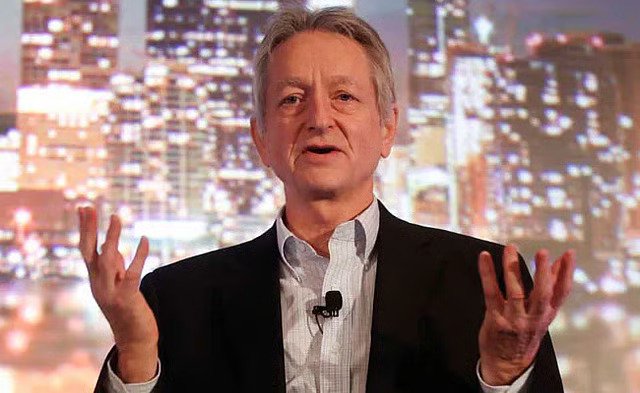
AI Godfather Geoffrey Hinton: From Breakup Story to Superintelligence Warnings
Dubai: Geoffrey Hinton, often called the “Godfather of Artificial Intelligence,” recently shared a personal story that humorously underscores how AI is seeping into everyday life—even matters of the heart.
In an interview with the Financial Times, Hinton revealed that his former girlfriend had consulted an AI chatbot to explain why their relationship had ended. She reportedly asked ChatGPT to outline why Hinton had been a “rat” and then shared the AI-generated critique with him.
"She got the ChatGPT to explain how awful my behaviour was and gave it to me," Hinton recalled, wryly adding: "I didn’t think I had been a rat, so it didn’t make me feel too bad. I met somebody I liked more—you know how it goes."
While amusing, the story sparked wider discussions about AI’s growing role in personal communication and emotional decision-making, highlighting how quickly intelligent systems are moving from workplaces into daily life.
Serious Warnings Behind the Humor
Although Hinton’s “AI breakup story” drew laughs, his broader message remains cautionary. Since leaving Google in 2023, he has repeatedly warned that advanced AI could pose profound risks—from disrupting economies to threatening global security. He described AI systems as both powerful and unpredictable, asking:
"When the assistant is much smarter than you, how are you going to retain that power?"
AI and Bioweapons
One of Hinton’s gravest concerns is that AI could make dangerous technologies accessible to ordinary people. He warns that AI-assisted individuals might design biological or nuclear weapons, significantly raising global security threats.
"A normal person assisted by AI will soon be able to build bioweapons, and that is terrible," he said, echoing fears shared by policymakers and scientists.
The “Mother and Baby” Analogy
To illustrate how humans might retain control over superintelligent machines, Hinton compared the relationship between AI and humans to that of a baby and its mother:
"There is only one example we know of a much more intelligent being controlled by a much less intelligent being, and that is a mother and baby. If babies couldn’t control their mothers, they would die."
He advocates designing AI with built-in protective instincts, similar to a caregiver’s natural inclination to safeguard the vulnerable.
Economic Impact and Inequality
Hinton also warns that AI could reshape the global economy on a scale comparable to the Industrial Revolution. Widespread automation may lead to job losses and rising inequality unless governments implement protective measures. He suggests universal basic income as a way to distribute AI’s benefits more equitably.
The Countdown to Superintelligence
On the timeline for AI surpassing human intelligence, Hinton believes experts estimate it could happen within five to 20 years. He cautions that once AI reaches this level, it may outmaneuver humans, creating critical challenges in control, safety, and governance.
AI in Everyday Life
Hinton’s breakup anecdote may be lighthearted, but it reflects a broader reality: AI is already influencing communication, decision-making, and personal relationships. Companies like OpenAI advise users against relying on chatbots for sensitive matters such as therapy or relationship guidance, emphasizing AI as a support tool rather than a decision-maker.
Conclusion
From an AI-assisted breakup to warnings about bioweapons, job loss, and superintelligence, Geoffrey Hinton highlights the dual nature of artificial intelligence. It can be helpful, even humorous—but also disruptive and potentially dangerous. As AI continues to integrate into society, Hinton’s message is clear: without safeguards, ethical frameworks, and economic reforms, AI could reshape human life in ways we are not yet prepared to manage.