
Middle East Eyes $200 Billion Gas Investment Amid Surging Power Demand
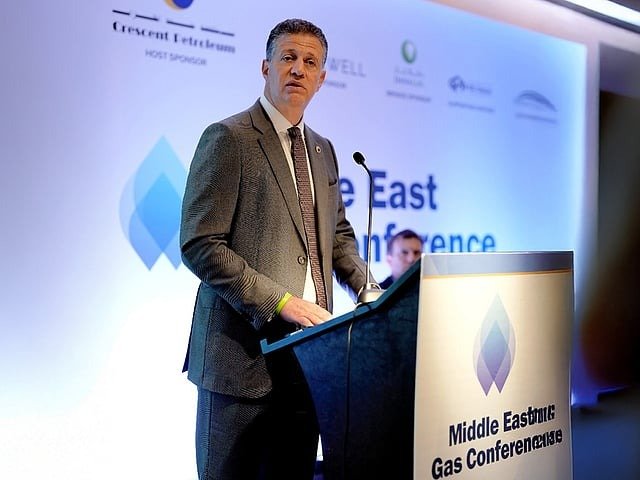
<p>The Middle East’s natural gas industry is entering a pivotal phase as regional leaders and global energy executives call for <strong>$200 billion in new investment</strong> over the next four years. The objective: boost gas production by <strong>30 per cent by 2030</strong> to meet skyrocketing power demand fueled by rapid population growth, large-scale industrialization, and the fast-expanding energy requirements of AI technologies.</p><p>This projection was shared at the <strong>first Middle East Gas Conference</strong>, held in Dubai, where more than 150 senior leaders from national oil companies (NOCs), international oil companies (IOCs), policymakers, and financial institutions gathered to discuss the future of the region’s gas ecosystem.</p><h3><strong>A Critical Moment for Regional Power Security</strong></h3><p>Speakers emphasized that the Middle East is on track to become the <strong>world’s second-largest natural gas producer</strong>, trailing only North America. Since 2020, the region’s gas output has already grown by more than 15%, but demand continues to outpace supply as electricity consumption rises sharply.</p><p>At the conference, Crescent Petroleum CEO <strong>Majid Jafar</strong> outlined the scale of the challenge and opportunity ahead.<br>“Our region is on track to become the world’s second-largest producer of natural gas,” he said. “Gas production has grown over 15 per cent since 2020 and is expected to rise another 30 per cent by 2030 — requiring $200 billion in investment.”</p><p>He stressed that natural gas will be “central to ensuring energy security, supporting industrial development, and enabling the clean energy transition,” highlighting its role as a cleaner alternative to oil in power generation.</p><h3><strong>Electricity Demand Surges Across the Middle East</strong></h3><p>Delegates noted that the region must add <strong>14 billion cubic feet per day (bcfd)</strong> of new gas supply by 2030—roughly equal to <strong>Europe’s entire power-sector gas demand today</strong>. To reach the target of 86 bcfd, countries must accelerate investments in extraction, pipelines, LNG processing, and storage infrastructure.</p><p>Several factors are driving this unprecedented increase in demand:</p><p><strong>Population growth</strong> across GCC nations</p><p><strong>Rising air conditioning loads</strong>, especially during peak summer</p><p><strong>Massive energy needs for desalination</strong>, crucial for water security</p><p><strong>The rapid build-out of AI data centres</strong>, which require stable and affordable baseload power</p><p>With countries like the UAE and Saudi Arabia investing heavily in AI and digital infrastructure, natural gas is positioned as the most reliable energy source to support new high-power server facilities.</p><h3><strong>A High-Level Gathering of Regional Energy Leaders</strong></h3><p>The conference, hosted at the Waldorf Astoria DIFC and organised by <strong>Petroleum Economist</strong> in partnership with Crescent Petroleum, brought together top executives from leading companies including <strong>ADNOC, Aramco, XRG, Dana Gas, Bapco Energy, RAK Gas, Shell, and SNOC</strong>. Major financial institutions—such as <strong>Deutsche Bank, FAB, and Cantor Fitzgerald</strong>—also attended to discuss financing models for gas development.</p><p>Keynote speakers included <strong>Musabbeh Al-Kaabi</strong>, CEO of ADNOC Upstream, and <strong>Abdulkarim Al-Ghamdi</strong>, Executive Vice President for Gas at Saudi Aramco.</p><h3><strong>Saudi Aramco Highlights Gas as the Backbone of Future Energy Strategy</strong></h3><p>Abdulkarim Al-Ghamdi underscored the essential role of natural gas in meeting the region’s long-term sustainability goals.<br>“Today’s discussions underline how critical gas and related infrastructure are for meeting rising power demand and supporting industrial growth,” he said.</p><p>He emphasized that close collaboration among governments, investors, and industry players is essential to building a resilient and integrated energy system.</p><h3><strong>Aramco’s Ambitious Gas Expansion Plan</strong></h3><p>Jassim Alshirawi, Secretary General of the International Energy Forum, highlighted the scale of Aramco’s ongoing investment.<br>He noted that Aramco is executing <strong>one of the most ambitious gas expansion programmes in its history</strong>, targeting an <strong>80 per cent increase</strong> in sales gas production capacity by 2030 compared to 2021 levels. This expansion is expected to generate between <strong>$12 billion and $15 billion</strong> in additional annual operating cash flow.</p><p>He pointed out that natural gas remains central to global energy strategies due to its relatively low carbon profile, reliability, and affordability.</p><h3><strong>Towards a More Sustainable and Secure Gas Future</strong></h3><p>Industry leaders also focused on new financial models and regulatory frameworks necessary to accelerate development. Strengthening partnerships between producers, investors, and policymakers was identified as a key requirement for ensuring long-term energy security.</p><p>Paul Hickin, editor-in-chief and chief economist at Petroleum Economist, summed up the event’s significance:<br>“This conference brought the industry together to unlock the full potential of Middle East gas, supporting secure and sustainable growth across the region.”</p><h3><strong>A Defining Decade Ahead</strong></h3><p>As the region prepares for a future shaped by digital transformation, rising populations, and ambitious diversification plans, natural gas will remain a cornerstone of energy planning. The call for $200 billion in investment underscores both the urgency and the opportunity. With strong political will, international financing, and rapid technological advancement, the Middle East is positioning itself to meet global energy challenges — and emerge as a dominant force in the natural gas market.</p>