
UAE to Begin Global Tax Data Sharing on Digital Assets and Cryptocurrencies by 2028
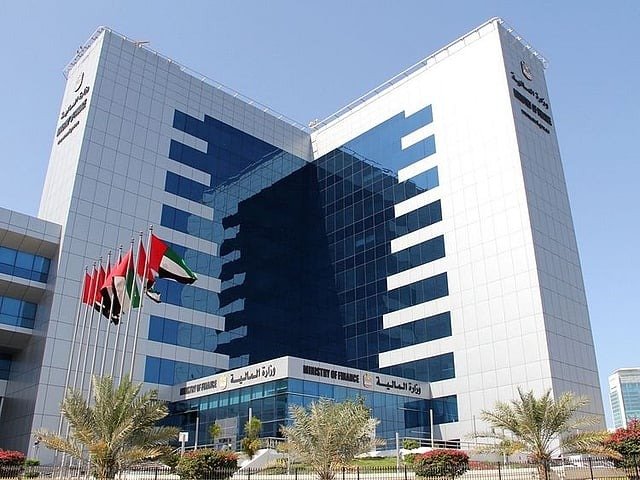
<p>The <strong>United Arab Emirates (UAE)</strong> will start <strong>sharing tax-related financial data on digital assets and cryptocurrencies with other countries from 2028</strong>, according to a new announcement from the <strong>Ministry of Finance</strong>. The move is part of a broader effort to enhance global tax transparency and align with updated international standards set by the <strong>Organisation for Economic Co-operation and Development (OECD)</strong>.</p><p>This landmark decision places the UAE at the forefront of the next phase of <strong>global tax governance</strong>, as digital currencies, tokenized assets, and central bank digital currencies (CBDCs) become increasingly integrated into the global financial system.</p><h3><strong>Implementation of CRS 2.0 and CARF Frameworks</strong></h3><p>The UAE’s data-sharing initiative will be implemented under the <strong>Common Reporting Standard 2.0 (CRS 2.0)</strong> and the <strong>Crypto-Asset Reporting Framework (CARF)</strong> — both developed by the OECD to extend tax transparency rules to new digital asset classes.</p><p>According to the Ministry of Finance, CRS 2.0 will take effect in the UAE on <strong>January 1, 2027</strong>, with the <strong>first exchange of information scheduled for 2028</strong>. The new system builds on the existing <strong>Automatic Exchange of Information (AEOI)</strong> framework, expanding it to include <strong>electronic money</strong>, <strong>central bank digital currencies</strong>, and <strong>crypto-asset activities</strong>.</p><p>The Ministry stated that adopting these standards demonstrates the UAE’s <strong>ongoing commitment to international cooperation, transparency, and responsible innovation</strong>. It also “reflects the UAE’s advanced position in global competitiveness indicators” and its dedication to “the highest standards of financial governance.”</p><h3><strong>Enhancing Oversight of Digital Finance</strong></h3><p>Under the revised framework, financial institutions, crypto exchanges, and service providers dealing with digital assets will be required to adopt <strong>enhanced due diligence, auditing, and reporting standards</strong>.</p><p>The goal is to ensure that <strong>digital finance growth does not create blind spots in global tax oversight</strong>, while maintaining a level playing field between traditional financial institutions and crypto-based platforms.</p><p>These measures expand upon <strong>Federal Decree No. (48) of 2018</strong> and <strong>Cabinet Resolution No. (93) of 2021</strong>, which established the UAE’s first system for automatic exchange of tax information. The latest update now extends these principles to <strong>emerging forms of value exchange</strong>, including tokenized assets and blockchain-based financial instruments.</p><p>The UAE’s new system also introduces mechanisms to ensure <strong>data security and integrity</strong>, ensuring that sensitive information is shared in accordance with strict international protocols.</p><h3><strong>Global Context: OECD’s Push for Transparency</strong></h3><p>The OECD’s <strong>Common Reporting Standard (CRS)</strong>, first introduced in 2014, has become one of the world’s most significant tax transparency frameworks. It currently includes participation from more than <strong>100 jurisdictions</strong>, enabling governments to share financial information to combat tax evasion and improve compliance.</p><p>The 2025 update, known as <strong>CRS 2.0</strong>, represents one of the most comprehensive expansions of this system. Alongside CARF, it ensures that <strong>digital assets and virtual currencies</strong> — once outside the traditional financial reporting ecosystem — now fall under global information exchange rules.</p><p>These frameworks aim to eliminate gaps that previously allowed individuals or corporations to move wealth through unregulated crypto channels or digital asset holdings. By integrating blockchain-based assets into the CRS, governments worldwide will have a more accurate picture of cross-border financial activity.</p><h3><strong>UAE’s Leadership in Financial Transparency</strong></h3><p>In its statement, the UAE Ministry of Finance described the adoption of CRS 2.0 and CARF as a <strong>“significant milestone”</strong> in strengthening the nation’s reputation as a <strong>trusted, transparent, and globally compliant financial hub</strong>.</p><p>Officials said the move underscores the UAE’s <strong>alignment with OECD-led initiatives</strong> and its commitment to maintaining strong relationships with <strong>international regulatory bodies and financial institutions</strong>.</p><blockquote><p>“The UAE’s participation in CRS 2.0 and CARF reflects a pragmatic approach to maintaining transparency and consistency across both traditional and digital financial systems,” the Ministry said.</p></blockquote><p>The UAE has also taken steps to ensure its domestic frameworks are fully compatible with global reporting systems, reducing duplication and enabling seamless integration with other jurisdictions.</p><h3><strong>Impact on Investors and Financial Markets</strong></h3><p>For investors, analysts say the UAE’s adoption of CRS 2.0 could <strong>enhance confidence in the country’s financial system</strong>, demonstrating that digital asset markets operate under the same transparency and compliance standards as traditional investments.</p><p>This move is expected to <strong>strengthen the UAE’s position as a top-tier financial center</strong>, particularly as it continues to attract global crypto entrepreneurs, fintech startups, and blockchain-driven investment firms.</p><p>Moreover, greater regulatory clarity and international cooperation will likely <strong>foster responsible innovation</strong> while deterring illicit activities linked to unregulated crypto exchanges or tax avoidance schemes.</p><h3><strong>Future Outlook: A Unified Global Reporting Standard</strong></h3><p>By 2028, the UAE will join a growing number of jurisdictions sharing <strong>tax and ownership data on digital assets</strong> under OECD’s global exchange system. This will create a unified framework that bridges traditional banking with the fast-evolving world of <strong>decentralized finance (DeFi)</strong>.</p><p>Experts say this alignment not only helps maintain the UAE’s reputation for good governance but also supports its long-term economic goals under <strong>UAE Vision 2031</strong>, which emphasizes sustainable growth, innovation, and international cooperation.</p><p>As the world moves toward digital finance, the UAE’s proactive embrace of <strong>CRS 2.0 and CARF</strong> reaffirms its status as a forward-thinking nation — one that balances innovation with accountability, ensuring that <strong>transparency remains at the heart of progress</strong>.</p>