

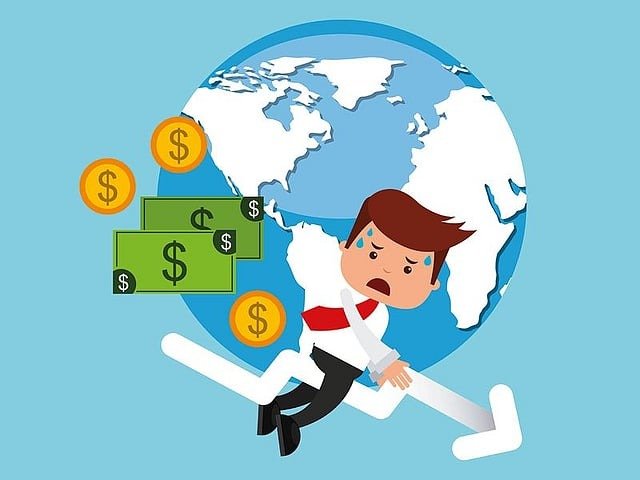
US Shutdown Drags Into Second Week: How Washington’s Deadlock Could Shake the Global Economy
Washington Stalemate Deepens
Dubai: The United States government shutdown — now entering its second week — shows no signs of ending soon. Since October 1, 2025, federal agencies have been operating under limited capacity after lawmakers in Washington failed to approve a new budget.
It’s a familiar political standoff, but one with far-reaching economic consequences. The longer it continues, the greater the potential disruption not only to American households and businesses but also to the global economy that depends on the US as a trade and financial powerhouse.
Why the Government Shut Down
At the heart of this year’s shutdown is a bitter dispute over healthcare funding. Democrats are insisting that any new spending package must include an extension of Affordable Care Act (ACA) premium tax credits, which help millions of Americans afford health insurance. These subsidies are due to expire at the end of 2025, potentially leading to higher healthcare costs next year.
Republicans — who currently control Congress and the White House — want to separate the healthcare issue from the broader budget bill. They’re pushing for what’s known as a “clean” Continuing Resolution (CR), a short-term measure that would reopen the government temporarily, likely until November 21, while longer-term negotiations continue.
President Donald Trump has added pressure by linking the standoff to his administration’s goals of cutting federal spending and reducing the size of the civil service, moves that have heightened tensions on Capitol Hill.
A Familiar But Costly Drama
The US has faced several shutdowns before, but each one carries real-world costs.
The longest shutdown on record lasted 35 days, from December 2018 to January 2019, while another in 2013 ran for 16 days. Both caused widespread service disruptions, delayed salary payments for hundreds of thousands of government workers, and shook consumer confidence.
Analysts warn that this time could be worse.
“The political environment is far more polarized today, and economic uncertainty is already high,” said a senior economist at a Dubai-based investment firm. “A prolonged shutdown risks tipping fragile global markets into a deeper slowdown.”
Who’s Feeling the Impact
Within the US, hundreds of thousands of federal employees have already been furloughed, meaning they’re not being paid until the government reopens. Critical services — including visa processing, national parks, and federal loan programs — are operating at reduced capacity.
But the effects reach far beyond American borders. The US plays a central role in global trade, currency stability, and investor sentiment. When Washington stalls, the ripple effects can spread quickly:
Financial markets: Delayed economic data releases, such as employment and inflation reports, make it harder for investors to gauge market direction.
Global trade: Uncertainty about US policy can delay shipping, customs, and export approvals, especially for technology and defense contracts.
Investor confidence: With the world’s largest economy in limbo, global markets often react with caution — pushing investors toward gold and other safe-haven assets.
Already, gold prices have surged near record highs of $3,900 an ounce, reflecting investors’ anxiety about US fiscal stability.
What Could End the Shutdown
The government can only reopen once Congress passes, and the President signs, new funding legislation. That could take the form of:
A short-term Continuing Resolution (CR) — the most likely outcome, allowing temporary funding to restart operations; or
A full-year spending package — which would resolve the impasse but require lengthy negotiations.
Historically, public pressure tends to mount after two weeks, when federal workers start missing paychecks. Economists expect that the political cost of extending the shutdown could force both parties back to the table within days — though no concrete talks have yet been scheduled.
The Global Stakes
A prolonged shutdown could hit global trade and financial markets at a fragile moment. Many economies in Asia and Europe are already grappling with slower growth and high borrowing costs. The US slowdown could further dampen demand for exports, while market uncertainty may push investors to cut risk exposure.
“When the world’s largest economy sneezes, everyone feels it,” said one UAE-based financial strategist. “A longer shutdown could delay trade flows, weaken the dollar, and drive more volatility across emerging markets.”
Bottom Line
As the US shutdown moves into its second week, the stakes are rising — not just for American workers and businesses but for the global economy that depends on US leadership and stability.
Unless lawmakers in Washington find common ground soon, the political deadlock could erode global investor confidence, slow trade flows, and inject fresh uncertainty into already fragile markets.
For now, all eyes remain on Capitol Hill — where every passing day of inaction carries a growing global price tag.