

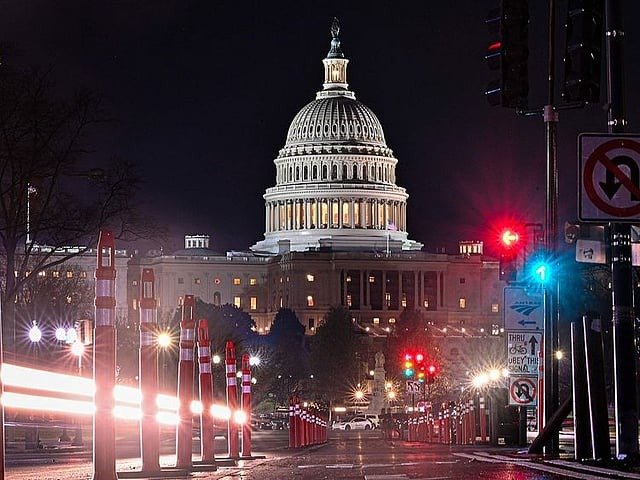
Why a US Government Shutdown Could Rattle the World Economy
Dubai: The world’s largest economy may be hours away from partially shutting down. With US lawmakers still locked in a budget standoff, federal funding is at risk of running out—triggering the 21st government shutdown since 1977.
Such episodes are not unusual in Washington. But this time, economists and investors warn, the stakes are higher.
What a Shutdown Means
If Congress fails to pass a funding bill, large parts of the US federal government will close.
Who’s affected? Hundreds of thousands of federal workers will be furloughed, unpaid until lawmakers strike a deal.
What continues? Essential services such as the military, Social Security, and law enforcement.
What stops? Parks, museums, and key government services. Importantly, the release of vital economic data like the monthly jobs report would be delayed.
While daily inconveniences hit American households hardest, the implications reach far beyond US borders.
Economic Fallout: Slow but Serious
Shutdowns don’t crash the economy overnight. The damage builds week by week.
Economists estimate that each week of shutdown trims 0.1% off US quarterly growth.
The 2018–19 shutdown, which lasted 35 days, cut output by roughly 0.4%, although much of this was later recovered when workers received back pay.
Markets have historically shown resilience. Since 1976, the S&P 500 has often risen in the year following shutdowns. During the last major episode, stocks climbed over 10%.
So why does this one feel different?
Why This Time is Riskier
The US economy is already under strain:
Job creation has slowed significantly.
Inflation remains stubbornly high.
Consumer confidence is fragile.
Most importantly, a shutdown would halt the flow of crucial economic data. For the Federal Reserve, which is weighing whether to raise or cut interest rates, this is like “flying blind.” Without jobs and inflation figures, monetary policy decisions become guesswork.
In stable times, such a delay would be inconvenient. In today’s fragile climate, it could be destabilizing.
Global Ripples: From Oil to Credit Ratings
Because the US dollar and Treasury bonds serve as global benchmarks, shutdowns create ripple effects across the world economy.
Oil prices: A weaker dollar often boosts crude oil prices. For Gulf exporters like the UAE, that means higher revenues—but also higher global inflation.
Markets: Investors may temporarily flock to “safe havens” such as gold or US bonds. Equities have usually recovered quickly after past shutdowns.
Credit ratings: A shutdown does not equal default, but rating agencies have warned about America’s fiscal discipline. Any downgrade would unsettle global markets.
Confidence: Perhaps the most damaging effect is psychological. If the US government appears dysfunctional, global trust in the world’s largest economy erodes.
Why UAE Readers Should Care
For the UAE, the link to Washington’s political drama is direct.
Oil dependence: As the region’s key export, oil is priced in US dollars. Dollar swings directly affect government revenues and fiscal planning.
Market ties: Dubai and Abu Dhabi investors remain closely tied to Wall Street sentiment. A sell-off in New York often ripples into the Gulf’s stock exchanges.
Currency peg: The UAE dirham is pegged to the US dollar. This means shifts in US monetary policy—already complicated by a shutdown—feed straight into UAE interest rates.
In short, while a US shutdown may not trigger a global crisis, it can create turbulence at a sensitive time for international markets.
The Political Wildcard
Shutdowns are not rare: since 1977, there have been 20 episodes, averaging just over a week. Most are resolved quickly once political pressure mounts.
But today’s political landscape is far more polarized. If the current standoff drags on, the risks could rise sharply.
For now, most analysts expect limited damage—unless this becomes the longest shutdown in history. In that case, the effects on global confidence, markets, and policymaking could be far more severe.
Final Word
The US may not grind to a halt if the government shuts down, but the shockwaves will be felt worldwide. From oil prices in the Gulf to interest rate decisions in Washington, this political drama is more than an American story—it’s a reminder of how deeply connected the global economy remains to the health, stability, and credibility of the United States.