

Abu Dhabi Pilots Drone Delivery to Boost Smart Logistics
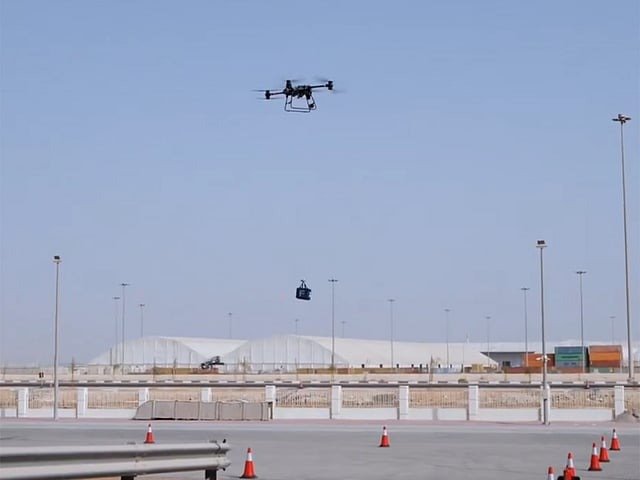
<p><strong>Abu Dhabi, September 19, 2025</strong> – The future of logistics is taking flight in the UAE capital. Abu Dhabi has officially begun testing <strong>drone delivery systems</strong>, as part of a wider strategy to position the emirate as a hub for smart, sustainable, and autonomous transportation.</p><p>The trial, overseen by the <strong>Integrated Transport Centre (ITC)</strong> under the Department of Municipalities and Transport, was conducted in collaboration with <strong>Load Autonomous</strong>, a company specializing in aerial logistics solutions.</p><h3>A glimpse of the future</h3><p>During the demonstration, a drone fitted with a <strong>robotic arm</strong> transported a parcel from the <strong>Al Samha area to the Khalifa Industrial Zone (KIZAD)</strong>. The aircraft relied on an <strong>advanced navigation system</strong> to ensure safety, accuracy, and efficiency throughout its flight.</p><p>Abdullah Hamad Al Ghafli, Acting Director General of the ITC, emphasized that the trial reflects Abu Dhabi’s growing role in transport innovation. <i>“This trial reflects Abu Dhabi’s commitment to adopting global innovations in transport and logistics, and to using technology to raise the quality of services,”</i> he said.</p><h3>Why drone delivery matters</h3><p>The initiative highlights Abu Dhabi’s vision of building a <strong>smarter, faster, and greener logistics network</strong>. With the rapid rise of <strong>e-commerce</strong> and growing expectations for same-day or even same-hour deliveries, drones offer an opportunity to cut delivery times dramatically.</p><p>Instead of days, packages could be delivered in <strong>just hours</strong>, a major shift for supply chains that rely heavily on road transport today. Drones also reduce <strong>traffic congestion</strong>, cut <strong>carbon emissions</strong>, and lower the need for traditional infrastructure.</p><h3>ITC’s role in regulation and safety</h3><p>Drone operations in Abu Dhabi are carefully managed through the <strong>national unified platform for unmanned aircraft traffic management</strong>. This system streamlines approvals for commercial drone use while ensuring compliance with <strong>safety, airspace, and privacy standards</strong>.</p><p>Such oversight is critical as the skies become busier with autonomous vehicles. By putting a strong regulatory framework in place early, Abu Dhabi is ensuring that drone delivery systems are integrated safely and efficiently.</p><h3>New technology on display</h3><p>Alongside the pilot program, Load Autonomous showcased its latest innovation — <strong>“Heli,” a hybrid vertical takeoff and landing (VTOL) cargo drone</strong>.</p><p>Key features of Heli:</p><p>Payload capacity: <strong>up to 250 kilograms</strong></p><p>Range: <strong>300 kilometers</strong></p><p>Hybrid design: <strong>electric motors + internal combustion engine</strong></p><p>Flexibility: Can operate without the need for conventional airport infrastructure</p><p>This makes Heli especially suitable for <strong>medium-range cargo transport</strong>, connecting industrial zones, ports, and remote locations with minimal infrastructure investment.</p><p>Rashid Matar Al Manai, CEO of Load Autonomous, explained the potential: <i>“The use of drones in logistics helps accelerate delivery times, meeting the growing demands of e-commerce and modern supply chains. What used to take days with traditional delivery methods can now be achieved in just hours.”</i></p><h3>Broader strategy for autonomous mobility</h3><p>The trial is part of Abu Dhabi’s larger strategy to embrace <strong>autonomous systems and intelligent mobility solutions</strong>. This includes testing not only aerial drones but also <strong>autonomous ground delivery vehicles</strong>, particularly in smart city developments like <strong>Masdar City</strong>.</p><p>By promoting these technologies, Abu Dhabi aims to:</p><p>Reduce logistics costs</p><p>Improve delivery efficiency</p><p>Support sustainability goals</p><p>Position itself as a <strong>regional leader in smart transport</strong></p><h3>Challenges ahead</h3><p>While drone delivery has enormous promise, challenges remain. These include:</p><p>Navigating <strong>airspace restrictions</strong> in busy urban areas</p><p>Ensuring <strong>cybersecurity</strong> and protection from system hacks</p><p>Gaining <strong>public trust</strong> in autonomous systems</p><p>Scaling infrastructure to support large fleets of drones</p><p>Abu Dhabi’s pilot is therefore a crucial step in addressing these issues in a controlled, real-world environment.</p><h3>The road — and sky — ahead</h3><p>The drone delivery trial marks a <strong>milestone in Abu Dhabi’s digital transformation journey</strong>. With strong government backing, innovative technology partners, and a clear regulatory framework, the emirate is laying the groundwork for a future where drones play a central role in logistics and transport.</p><p>As autonomous systems advance, residents and businesses may soon see packages arriving not by van or bike, but from the skies — delivered quickly, cleanly, and efficiently by smart drones.</p>