

Don’t Let AI Make Students Lazy, Warns World Schools Summit Founder
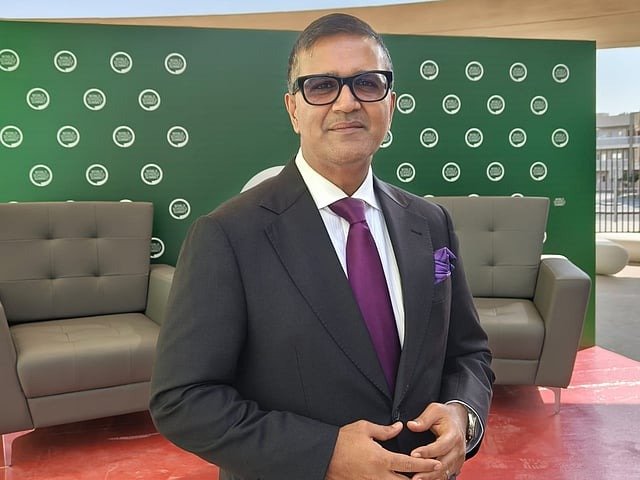
<h2><strong>UAE: Don’t Let AI Make Students Lazy, Warns World Schools Summit Founder</strong></h2><p>Artificial intelligence is rapidly transforming classrooms around the world, but educators must ensure that technology supports learning rather than replaces it. This was the central message from <strong>Vikas Pota</strong>, founder of <strong>T4 Education</strong> and the <strong>World Schools Summit</strong>, during an exclusive interview at the Summit held in Abu Dhabi.</p><p>Speaking at Yasmina British Academy in Khalifa City, Pota emphasized that while AI has become an unavoidable force in education, its use must be guided by teachers—not technologists alone. He urged schools to adopt a balanced approach that keeps students thinking critically instead of relying on AI for instant answers.</p><h2><strong>AI and Technology: Tools, Not Replacements</strong></h2><p>Pota observed that one of the strongest trends in today’s education landscape is the growing presence of AI-powered tools. However, he cautioned against viewing AI as a substitute for teachers.</p><p>“You can’t ignore the AI wave,” he said. “But educators must remain at the heart of decision-making for all these products and tools.”</p><p>He stressed that companies building educational technology need to collaborate with teachers, who understand classroom realities better than any software engineer. Through initiatives like the <strong>Global EdTech Prize</strong>, Pota explained that decisions about which technological tools to support are made by education leaders—not by investors seeking profit or by technologists acting alone.</p><p>“Google wants a partnership with the education sector because they understand that teachers bring experience and intuition,” Pota said. “Technologists know technology; teachers know children. When both come together, that combination becomes powerful.”</p><p>The two-day World Schools Summit was organised by <strong>T4 Education</strong>, <strong>Aldar Education</strong>, and the <strong>Emirates Foundation</strong>, with support from key partners including <strong>CIFF</strong>, <strong>Google</strong>, <strong>Microsoft</strong>, and <strong>HP</strong>. The summit brought together thousands of teachers, principals, and policymakers from around the world to discuss the future of learning.</p><h2><strong>The Risk of “Cognitive Laziness” Among Students</strong></h2><p>While AI tools can help students learn more efficiently, Pota warned that overdependence could lead to what he called “cognitive laziness.” This happens when students rely on AI systems—like homework helpers and essay generators—to finish tasks for them, instead of developing their own thinking.</p><p>“Teachers are being trained to encourage critical thinking,” he said. “AI must be used as part of the learning process, not the only process.”</p><p>He noted that the role of the teacher has become even more important, as educators must now guide students on how to use technology responsibly. Schools worldwide are investing in teacher training programs to ensure teachers can integrate AI effectively into lessons without allowing students to bypass real learning.</p><p>“If you believe AI should be part of the curriculum,” Pota added, “then you must invest in teacher capacity building.”</p><h2><strong>Preparing Students for Jobs That Don’t Yet Exist</strong></h2><p>With industries evolving rapidly, many of today’s students will eventually work in jobs that have not been created yet. According to Pota, this makes creativity, flexibility, and efficiency essential skills for the future workforce.</p><p>He pointed out that technology can help teachers save hours on routine tasks like lesson planning, giving them more time to mentor students and foster these essential skills.</p><p>“Technology makes work more efficient but does not replace human potential,” he said, highlighting that AI should empower—not eliminate—educators.</p><h2><strong>The Lasting Value of Human Connection</strong></h2><p>Despite the rise of digital tools, Pota said the world is placing greater value on real-life teachers and authentic interactions. Human connection, he argued, remains at the core of effective learning.</p><p>“We’re seeing a premium being placed on real teachers doing real work,” he said. He also stressed the importance of parents as key partners in the learning process—a role he believes is often overlooked.</p><h2><strong>Parents Will Demand More From Schools</strong></h2><p>As the world around them becomes more advanced, parents are beginning to expect the same level of innovation and efficiency from schools. Pota noted that while educational systems have been slow to evolve, consumer expectations are rising quickly.</p><p>“Parents are such an important part of education, yet they are often the forgotten voice,” he said. “Students and parents are demanding change, and schools are responding.”</p><p>He believes that stronger communication between schools, parents, and students will drive a new wave of educational improvements—ones that prioritize critical thinking, compassion, and responsible use of AI.</p>