

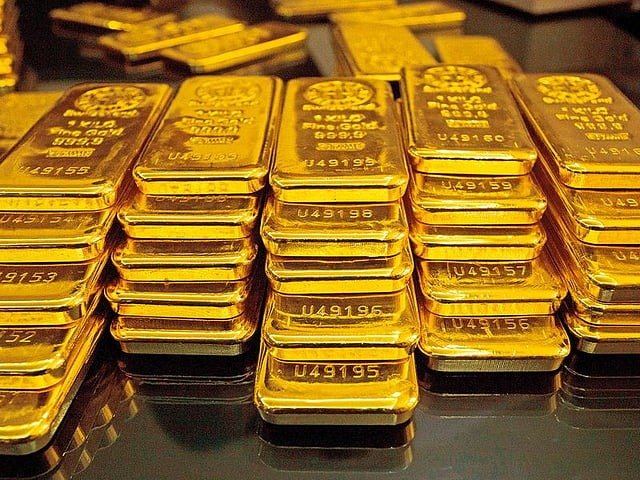
Dubai Gold Nears Dh500 as Rate-Cut Bets Strengthen
Dubai’s gold market edged higher on Wednesday, with local prices moving close to the key Dh500 level as global investors strengthened their expectations of a December interest-rate cut by the US Federal Reserve. The 24K benchmark rose to Dh499.75, while 22K gold reached Dh462.75, marking one of the strongest sessions this month as momentum returned to the bullion market.
The rise comes after weeks of narrow, range-bound trading in Dubai, which has seen gold prices fluctuating within one of the tightest monthly bands of 2025. With global bullion holding firm and the US dollar weakening for a second consecutive day, sentiment in the UAE gold market has turned more bullish.
Tight Trading Pattern Throughout November
For much of November, Dubai’s gold prices remained trapped in a narrow corridor as traders awaited fresh cues from global markets. On November 12, 24K gold briefly touched Dh504.75—one of the month’s highs—before easing as global indicators softened. Earlier in the month, on November 4, the rate dropped to Dh475.25, marking the monthly low as gold retreated from October’s record-setting performance.
The recent uptick is now pushing the local market back toward the Dh500 mark, a level that historically influences consumer sentiment and jewellery demand in the UAE. Retail buying typically accelerates when prices stabilise just below psychological thresholds.
Global Gold Steadies Above $4,165
In global markets, bullion hovered near $4,165 an ounce during Asian trading hours. After a largely flat session on Tuesday, gold found renewed support from a weaker US dollar. A softening dollar makes gold more affordable for international buyers, increasing overall demand.
The global gold market has consolidated significantly above the $4,000 level throughout November, stabilising after last month’s surge above $4,380 an ounce, which marked one of the highest points in modern trading history.
Rate-Cut Bets Strengthen as US Data Weakens
A major driver of the current upward trend is the increasing belief among traders that the Federal Reserve may cut interest rates at its December meeting. This comes after a batch of delayed US economic data suggested a slowdown in consumer activity.
Recent figures showed:
Retail sales in September rose only marginally
Consumer confidence saw its sharpest drop since April
Household sentiment indicators weakened noticeably
These readings have raised concerns that the US economy is losing steam, influencing expectations for monetary easing.
Adding to this shift, Kevin Hassett, the White House National Economic Council Director and widely considered the frontrunner to become the next Fed chair, is closely aligned with President Donald Trump’s preference for lower interest rates. Markets view his potential appointment as a sign that a dovish policy direction could be coming.
Why Lower Rates Support Gold
Gold traditionally performs well in environments of declining interest rates because:
Gold offers no yield, making it more attractive when bond yields fall
Lower borrowing costs boost liquidity, encouraging investment in commodities
A softer dollar typically accompanies rate cuts, increasing global demand
The combination of weak economic data, reduced Treasury yields, and shifting political signals has therefore created favourable conditions for gold prices to rise.
A Historic Year for Gold
Even with occasional pullbacks, 2025 remains a standout year for bullion. Gold prices have gained more than 55% so far—positioning the metal for its strongest annual performance since 1979.
Several factors have driven this exceptional rally:
Aggressive central-bank purchases, especially from emerging markets
Geopolitical uncertainty, pushing investors towards safe-haven assets
Retail investment demand, fuelled by inflation concerns
The so-called “debasement trade”, where investors move away from sovereign bonds and fiat currencies toward tangible assets like gold
Market analysts note that even if gold experiences short-term price corrections, the long-term trend remains strongly upward due to global economic uncertainty and structural demand.
Outlook for Dubai Gold Prices
With bullion stabilising near multi-week highs and interest-rate expectations shifting, Dubai’s gold rates may continue to flirt with or cross the Dh500 level in the coming sessions. Retail shoppers in the UAE, particularly ahead of the busy year-end season, will be watching closely for the next set of global indicators—especially signals from the Federal Reserve.