

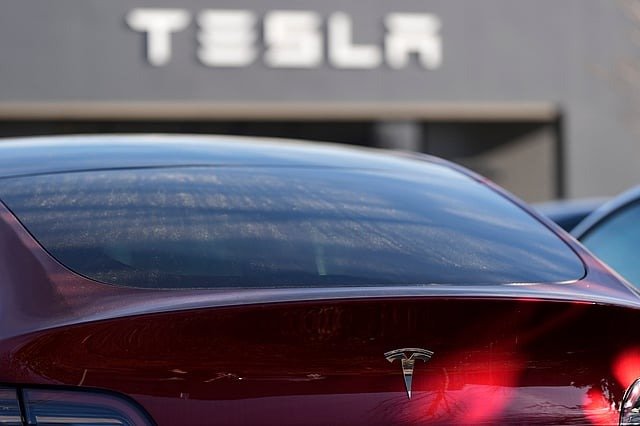
Tesla Launches Cheaper Model Y and Model 3 to Regain Market Share Amid Sales Slump
New York: Tesla has unveiled more affordable versions of its Model Y and Model 3 electric vehicles in a bid to revive slowing sales and regain market share in an increasingly competitive global EV market.
The electric carmaker rolled out a $39,990 Model Y and a $36,990 Model 3, hoping lower price tags will attract cost-conscious buyers struggling with inflation and high interest rates. But despite the announcement, Tesla’s stock fell sharply, signalling investor doubts that the new trims will deliver the turnaround the company needs.
A challenging year for Tesla
It has been a tough 2025 for Tesla. Once the undisputed leader of the electric vehicle revolution, the company now faces stiff competition from both established automakers and emerging Chinese brands.
Tesla’s market share in the US and Europe has declined amid a wave of cheaper, feature-rich EVs from rivals like BYD, Hyundai, and Ford. Compounding the problem are anti-Elon Musk boycotts, an aging vehicle lineup, and the expiration of federal tax credits that once boosted demand.
“The company is under pressure to show growth, but simply stripping down old models isn’t the innovation investors were waiting for,” said Ivan Drury, senior analyst at Edmunds. “Buyers want something fresh — not a budget version of last year’s car.”
Tesla’s shares fell 4.5% to $443.09 on Tuesday, erasing gains from the previous day when markets had rallied in anticipation of a major new model reveal.
What’s new — and what’s missing
The new standard Model Y, priced just under $40,000, trades luxury for affordability. It offers a 321-mile range—lower than higher-end trims—and features a simplified interior with fabric upholstery instead of microsuede.
Tesla has also removed the panoramic glass roof, trimmed down the audio system, and eliminated the rear-seat touchscreen, all in the name of keeping costs down.
Similarly, the new Model 3 now starts at $36,990, or even below $35,000 after state rebates in places like New York. It comes with reduced driving range and fewer ambient lighting features.
While these cost reductions make the vehicles more accessible, analysts say Tesla risks alienating customers who expect its cars to stand out for technology, comfort, and performance.
Fierce competition in the $40K EV segment
The lower-priced Model Y will enter a crowded mid-range EV market, competing with the Ford Mustang Mach-E, Chevrolet Equinox EV, and Hyundai Ioniq 5 — all of which offer comparable range, advanced driver-assist features, and faster charging times.
“Tesla is facing an identity challenge,” said Sarah Choi, an automotive analyst based in Los Angeles. “It built its reputation as a premium, tech-driven brand. These stripped-down models might attract new buyers, but they could also dilute Tesla’s image.”
A move to protect volume, not margins
Industry experts view the cheaper variants as part of Tesla’s broader strategy to sustain production volumes, even if it means lower profit margins.
The timing reflects CEO Elon Musk’s focus on scale over luxury, as Tesla ramps up manufacturing capacity in Texas, Germany, and Mexico to fend off competition.
However, some analysts worry that Tesla’s pricing strategy has become reactive, with frequent price cuts and model refreshes that confuse customers and pressure earnings.
Customer response uncertain
For now, the success of the cheaper models will depend on whether price-sensitive customers see value in Tesla’s brand advantage — particularly its supercharger network, software ecosystem, and autopilot features.
But without a truly new model — like the long-promised $25,000 compact EV or the delayed Cybertruck expansion — Tesla may find it difficult to restore its growth trajectory.
“Investors were looking for something truly different,” said Drury. “This feels more like a stopgap measure than a game changer.”