

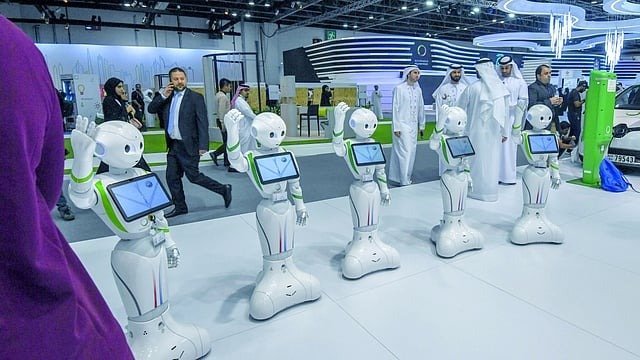
TRENDS and Cambridge AI launch global summer program to train Gulf youth in Artificial Intelligence
<h2><strong>TRENDS and Cambridge AI Collaborate to Empower Gulf Youth in Artificial Intelligence</strong></h2><p>In a major step toward building the region’s next generation of tech innovators, the <strong>TRENDS Research and Advisory Center</strong> has announced a strategic collaboration with <strong>Cambridge Artificial Intelligence</strong> to deliver an intensive <strong>AI summer program</strong> at the <strong>University of Cambridge</strong>. The initiative aims to nurture high school students from the UAE and other GCC nations who show outstanding potential in <strong>science, technology, and innovation</strong>.</p><p>Organized by the <strong>TRENDS International Training Institute</strong>, the 10-day residential program will take place in <strong>July and August 2026</strong> and is designed for <strong>students aged 16 to 18</strong> who aspire to shape the future through advanced knowledge and responsible use of artificial intelligence.</p><h2><strong>An International Academic Experience</strong></h2><p>The summer program offers a comprehensive educational journey that blends theory, experimentation, and innovation. Participants will benefit from:</p><p><strong>Lectures and workshops</strong> conducted by top University of Cambridge professors and AI experts.</p><p><strong>Practical field visits</strong> to cutting-edge laboratories and AI-focused startups.</p><p><strong>Hands-on innovation projects</strong>, allowing students to apply their learning to real-world challenges.</p><p>The program will culminate with a <strong>final graduation project</strong>, where students present innovative solutions powered by AI to a panel of academic experts and industry professionals.</p><p>In addition to technical training, the curriculum places special emphasis on <strong>AI ethics and responsible innovation</strong>, teaching students how to harness technology for positive, sustainable impact.</p><h2><strong>Bridging Global Knowledge with Regional Talent</strong></h2><p>According to <strong>Sultan Al Rubaei</strong>, Head of the TRENDS International Training Institute, the initiative marks a crucial milestone in academic cooperation between the Middle East and one of the world’s leading centers of learning.</p><blockquote><p>“This partnership reflects our vision to transfer world-class academic expertise to the region,” said Al Rubaei. “It provides Gulf students with exceptional opportunities to learn in a globally recognized academic environment, aligning with international education and innovation standards.”</p></blockquote><p>This collaboration aligns with the <strong>UAE’s Artificial Intelligence Strategy 2031</strong>, which aims to prepare youth for future economies driven by innovation, data, and smart technologies.</p><h2><strong>Artificial Intelligence: Redefining Learning and Training</strong></h2><p>Artificial intelligence is transforming how people learn, train, and develop skills. Once a futuristic concept, AI is now an integral part of <strong>education and personal development</strong>, helping individuals tailor learning experiences to their needs.</p><h3><strong>1. Understanding AI in Training</strong></h3><p>AI in education uses intelligent systems to analyze learner behavior, assess strengths and weaknesses, and deliver <strong>personalized, adaptive learning</strong> experiences. This includes:</p><p>Suggesting relevant courses and resources.</p><p>Providing real-time feedback on performance.</p><p>Simulating real-life experiences using <strong>virtual and augmented reality</strong>.</p><p>Offering 24/7 guidance through AI-powered chatbots.</p><h3><strong>2. AI Applications in Personal Skill Development</strong></h3><p>AI enables a new era of <strong>interactive and data-driven training</strong>:</p><p><strong>Personalized Learning Programs:</strong> AI algorithms recommend specific modules based on learning preferences and progress.</p><p><strong>Simulation-Based Training:</strong> Using <strong>VR and AI</strong>, learners can practice leadership, decision-making, and communication in lifelike scenarios.</p><p><strong>Performance Tracking:</strong> AI continuously analyzes engagement and outcomes to refine learning strategies.</p><p><strong>Language and Communication Tools:</strong> AI-powered writing and speech tools enhance fluency and accuracy, improving communication and confidence.</p><p><strong>AI Chatbots for Self-Training:</strong> Learners can simulate job interviews or presentations with instant, adaptive feedback.</p><h3><strong>3. Benefits of AI-Driven Learning</strong></h3><p>AI brings tangible improvements to the training ecosystem:<br> <strong>Personalized experiences</strong> replacing traditional one-size-fits-all methods.<br> <strong>Greater efficiency</strong>, saving time and resources.<br> <strong>24/7 accessibility</strong>, promoting continuous learning.<br> <strong>Interactive and engaging content</strong> to boost retention.<br> <strong>Accurate performance evaluation</strong> to refine skill-building.</p><p>These advantages make AI-driven learning particularly relevant for ambitious students aiming to excel in technology fields.</p><h3><strong>4. Essential Skills Enhanced by AI</strong></h3><p>Through its dynamic learning models, AI develops both technical and soft skills, such as:</p><p>Critical thinking and analytical reasoning.</p><p>Leadership and teamwork.</p><p>Time and project management.</p><p>Emotional intelligence and adaptability.</p><p>Creative problem-solving and communication.</p><h3><strong>5. Challenges of AI Integration</strong></h3><p>Despite its benefits, AI adoption in education faces challenges, including:</p><p>The need for <strong>robust digital infrastructure</strong>.</p><p>Balancing automation with <strong>human mentorship</strong>.</p><p>Ensuring <strong>data privacy and security</strong>.</p><p>Expanding <strong>Arabic-language AI content</strong> to ensure inclusivity across the GCC.</p><p>Addressing these issues will be key to ensuring that AI enhances — rather than replaces — the human element of learning.</p><h3><strong>6. The Future: Smart Learning for a Smarter World</strong></h3><p>AI’s future in education lies in <strong>fully adaptive, lifelong learning ecosystems</strong>. Institutions that invest now in smart learning environments will foster a new generation of <strong>creative, independent, and globally competitive innovators</strong>.</p><p>The TRENDS–Cambridge collaboration sets a model for how academia and technology can converge to empower youth — combining ethical awareness, scientific knowledge, and innovation.</p><h2><strong>A Vision Beyond Borders</strong></h2><p>By bringing Cambridge’s global expertise to Gulf students, the program highlights the UAE’s growing role as a <strong>regional hub for knowledge and innovation</strong>. It demonstrates how international partnerships can accelerate talent development while nurturing curiosity, leadership, and responsibility in the digital age.</p><p>As Sultan Al Rubaei emphasized:</p><blockquote><p>“Artificial intelligence is not just a field of study — it’s a driver of human progress. Through collaborations like this, we are shaping a future where learning is intelligent, inclusive, and deeply human.”</p></blockquote>