

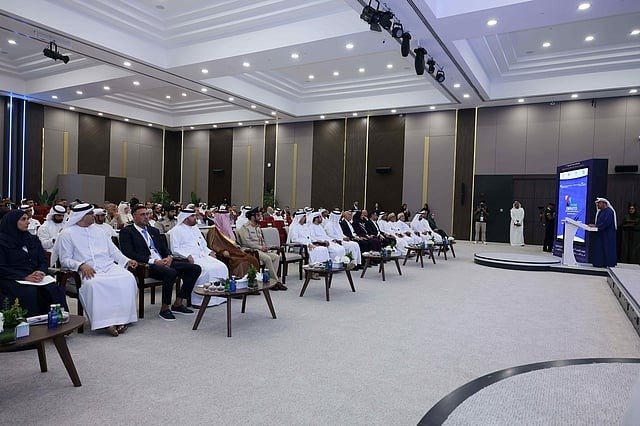
Dubai Hosts Global Summit to Fight Rising IP Crimes
<p>Dubai has once again positioned itself as a global leader in protecting innovation and strengthening economic security by hosting the 14th Regional Conference on Combating Intellectual Property (IP) Crimes. Organised by the Emirates Intellectual Property Association (EIPA) in collaboration with INTERPOL and key UAE government agencies, the event brought together more than 450 specialists from 25 countries across the Middle East, North Africa, Europe, Asia, and the United States.</p><p>Held under the theme <strong>“Intellectual Property Strategy: From Planning to Integration,”</strong> the summit took place at the Dubai Police Officers Club under the patronage of Lieutenant General Dhahi Khalfan Tamim, Deputy Chief of Police and Public Security in Dubai. Leaders from law enforcement, the private sector, and international organisations discussed challenges, enforcement gaps, and advanced technologies needed to counter the rapidly growing global IP crime market.</p><h3><strong>Global Experts Unite Against Rising IP Threats</strong></h3><p>Lieutenant General Dhahi Khalfan opened the summit by stressing the UAE’s deep commitment to protecting innovators and supporting creativity. He highlighted how intellectual property forms the backbone of modern economies—it drives competition, supports new ideas, and fuels sustainable growth. However, he also warned that IP crimes, whether physical or digital, have become a major threat and must be addressed through coordinated global efforts.</p><p>He pointed out that the UAE remains a regional leader in innovation. In the 2025 Global Innovation Index, the country ranked first in the Arab world and among the top 30 countries worldwide. He credited this success to strong laws, institutions, and continuous government investment in research and development.</p><p>Dhahi Khalfan also praised the work of the Emirates Intellectual Property Association for promoting IP awareness and training thousands of specialists across various sectors.</p><h3><strong>Growing Threats: From Fake Drugs to AI-Driven Crime</strong></h3><p>Major General Dr. Abdul Quddus Al Obaidly, Chairman of EIPA, presented a detailed overview of current trends and the growing dangers associated with IP crimes. He noted that the region has seen an annual increase of 8% to 12% in IP-related violations, especially within e-commerce and modern supply chains.</p><p>However, he also highlighted positive progress—thanks to federal and local coordination, the UAE recorded a 22% decline in counterfeit goods cases over the past five years. Artificial intelligence has played a major role in this success by reducing detection times by nearly half.</p><p>Dr. Al Obaidly shared alarming examples from around the world:</p><p><strong>Counterfeit aircraft parts</strong> reaching commercial planes</p><p><strong>Fake weight-loss injections</strong> going viral on platforms like TikTok</p><p><strong>Widespread counterfeit medicines</strong> across Africa</p><p><strong>Millions of fake products</strong> transported through small mail parcels, now the biggest loophole in global trade enforcement</p><p>He warned that these crimes are no longer limited to local black markets; they have evolved into sophisticated international networks that exploit technology, online platforms, and global trade systems.</p><h3><strong>Key Messages from Experts</strong></h3><p>Speakers at the summit emphasized three important truths:</p><p><strong>IP protection is a national security issue.</strong><br>Counterfeit medicines, fake aircraft parts, and hacked digital systems put lives at risk—not just economies.</p><p><strong>Digital platforms must share responsibility.</strong><br>No enforcement agency can inspect millions of global e-commerce parcels daily. Cooperation with marketplaces, payment systems, and tech platforms is essential.</p><p><strong>Criminal intelligence and data-sharing are crucial.</strong><br>Modern IP crimes involve international supply chains, money laundering routes, and online marketplaces. Effective enforcement starts with information and collaboration.</p><h3><strong>UAE’s Achievements in IP Protection</strong></h3><p>Dr. Maria Hanif Al Qassim from the Ministry of Economy and Tourism highlighted the UAE’s strong legal and technological framework for IP enforcement. She noted that by September 2025, the country had recorded:</p><p>402,311 registered trademarks</p><p>23,829 intellectual works</p><p>7,915 patents</p><p>11,346 industrial designs</p><p>The UAE has launched multiple initiatives, including the InstaBlock platform, which has already blocked more than 33,000 illegal websites promoting counterfeit goods.</p><p>Dubai Customs also shared major achievements, including 285 IP seizures worth Dh92.7 million in 2024 and the launch of the <strong>ZERO Project</strong>, using AI and data to stop IP violations before shipments reach UAE borders.</p><h3><strong>A Call for Stronger Regional Cooperation</strong></h3><p>INTERPOL expert Christine Pedersen described today’s IP crime landscape as a “silent, borderless war,” driven largely by cybercriminals. She called for deeper collaboration across customs, cybersecurity teams, financial intelligence groups, and private companies to counter these threats.</p><p>With representatives from global IP bodies, Gulf organisations, police forces, customs authorities, tech companies, and legal experts, the summit reinforced Dubai’s role as a global hub for security innovation.</p><p>The conference concluded with a clear message: protecting intellectual property is essential for economic stability, innovation, and public safety. Regional and international cooperation will be crucial in preventing the spread of counterfeit goods and digital IP crimes worldwide.</p>