

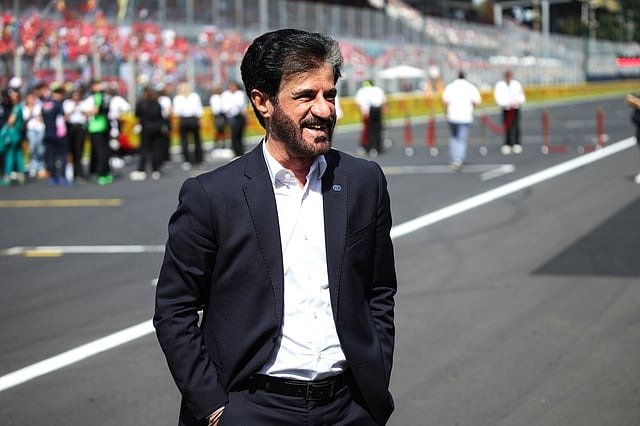
Ben Sulayem Praises UAE as F1 Title Showdown Arrives in Abu Dhabi
<p>FIA President <strong>Mohammed Ben Sulayem</strong> has expressed immense pride in the UAE’s growing global influence in motorsport as the world turns its attention to Abu Dhabi for one of the most dramatic Formula One championship finales in recent history. The <strong>Etihad Airways Abu Dhabi Grand Prix</strong>, taking place this Sunday at the iconic Yas Marina Circuit, will witness a tense three-way title fight between <strong>Lando Norris, Max Verstappen, and Oscar Piastri</strong>.</p><p>With the championship still undecided, the season’s final race is expected to draw millions of viewers worldwide. For Ben Sulayem, the moment is not just about sporting excitement—it is also a reflection of the UAE’s long-term commitment to motorsport excellence and the nation’s remarkable achievements on the international stage.</p><h3><strong>A Moment of National Pride</strong></h3><p>Ben Sulayem highlighted how far the UAE has come in shaping its identity as a global motorsport destination. “The UAE authorities have provided dedicated support for motorsport over many years,” he said, crediting the nation’s leaders for investing in world-class events and facilities.</p><p>These investments have positioned the UAE as a central figure in the motorsport world, attracting top racing talent, passionate fans, and international recognition. “As an Emirati, I’m proud of my country’s achievements in motorsport,” Ben Sulayem shared, emphasizing how the Abu Dhabi Grand Prix has become a symbol of the nation’s excellence.</p><p>As FIA President, he reaffirmed his commitment to supporting the UAE in strengthening its status as a premier motorsport hub. The Abu Dhabi Grand Prix serves as a testament to the Emirates’ ability to host major international events with precision, professionalism, and world-class hospitality.</p><h3><strong>The Middle East’s Growing Influence in F1</strong></h3><p>Ben Sulayem also noted the significant rise of the Middle East in the global motorsport landscape. With <strong>Bahrain, Saudi Arabia, Qatar, and the UAE</strong> all hosting F1 races, the region has become an essential part of the Formula One calendar.</p><p>These events have not only elevated motorsport in the region but have also contributed to increasing fan engagement, tourism opportunities, and international partnerships. The Middle East’s presence in Formula One continues to expand, showcasing its ambition to become a cornerstone of global sports.</p><h3><strong>Reflecting on Abu Dhabi’s F1 Debut and Evolution</strong></h3><p>Looking back to 2009, when Abu Dhabi hosted its first F1 race, Ben Sulayem recalled the challenges and the immense efforts needed to make the event successful. Before hosting an F1 Grand Prix, the UAE already had more than 30 years of motorsport history, but Formula One demanded a higher level of organisation and manpower.</p><p>More than <strong>700 marshals</strong> were required—far more than the 150 typically needed for major rallies. In the early years, approximately 350 UK volunteers supported the event. However, over time, the UAE successfully built and trained its own team of skilled marshals, many of them Emiratis. Their dedication played a key role in making the event self-sustaining and operationally independent.</p><p>Ben Sulayem stressed that this development was essential not only for the event’s longevity but also for its alignment with global sustainability goals. The FIA places strong emphasis on sustainable motorsport practices, and the UAE’s efforts set a positive example for other nations.</p><h3><strong>A Promising Future for Formula One</strong></h3><p>Looking forward, Ben Sulayem believes Formula One is entering an exciting new era. With <strong>Cadillac set to join the grid as the 11th team</strong> and <strong>Madrid becoming the newest host city</strong>, the sport continues to evolve. New FIA regulations aim to introduce lighter, more agile cars powered by sustainable fuel—a significant step toward environmentally responsible racing.</p><p>These innovations further highlight why Abu Dhabi has become a model venue for the sport. The Yas Marina Circuit, built with strategic investment and state-of-the-art infrastructure, has helped promote the UAE’s strengths in tourism, investment, and quality of life.</p><h3><strong>A Technological Powerhouse for Race Control</strong></h3><p>Recent multimillion-dirham upgrades have strengthened Yas Marina’s position as one of the most technologically advanced F1 circuits. Race control officials can monitor <strong>55 live camera feeds</strong>, timing screens, logs, and car tracking systems simultaneously. Such capabilities are vital—especially in a title decider featuring multiple championship contenders.</p><p>With Norris, Verstappen, and Piastri all vying for glory, the advanced monitoring systems may play a crucial role in ensuring a fair and accurate result in a race where every second counts.</p><h3><strong>A Grand Prix That Reflects UAE Excellence</strong></h3><p>As the F1 world prepares for a potentially historic finale, Ben Sulayem’s words capture the moment perfectly: the UAE has not only earned its place in motorsport—it has helped shape the future of the sport. The Abu Dhabi Grand Prix stands as a symbol of innovation, ambition, and national pride.</p>