

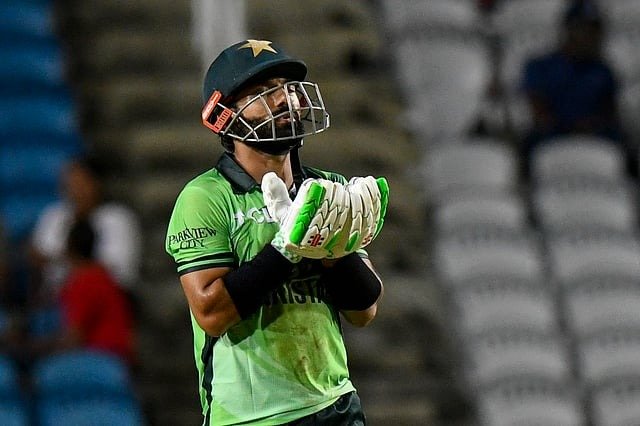
Crisis in Pakistan Cricket: Rizwan Rejects Contract, Babar Out for a Duck
<h3>Pakistan Cricket in Turmoil: Rizwan’s Contract Row and Babar’s Struggles Reflect a Deepening Crisis</h3><p>Pakistan cricket finds itself once again at the center of controversy—both on and off the field. Following a disappointing 55-run defeat against a depleted South African side in the first T20I at Rawalpindi, off-field issues have taken the spotlight. Star wicketkeeper-batter <strong>Mohammad Rizwan</strong> has refused to sign his new central contract with the <strong>Pakistan Cricket Board (PCB)</strong>, while former captain <strong>Babar Azam</strong>’s return to T20I cricket ended in disappointment with a duck.</p><p>These developments underscore a growing divide between senior players and the board—one that could have serious repercussions for Pakistan’s cricketing future.</p><h3>The Contract Dispute: Rizwan Stands His Ground</h3><p>According to reports, Mohammad Rizwan is the <strong>only player out of 30 centrally contracted cricketers</strong> yet to sign his 2025 deal. His decision comes amid frustration over significant changes made by the PCB to the contract structure.</p><h4>What’s behind the disagreement?</h4><p><strong>Abolition of Category A:</strong><br>The PCB’s decision to <strong>eliminate the top pay tier (Category A)</strong> has angered many senior players. The move is perceived as a signal of dissatisfaction from the board following the team’s inconsistent performances over the past year.</p><p><strong>Demotion and Dissatisfaction:</strong><br>Rizwan, previously among the top earners, has been <strong>moved to Category B</strong>, a decision he reportedly sees as disrespectful considering his seniority, consistency, and contributions.</p><p><strong>Demand for Reform:</strong><br>The wicketkeeper-batter is demanding the <strong>reinstatement of Category A</strong> and <strong>greater autonomy for team captains</strong>, arguing that players who shoulder leadership and responsibility deserve better treatment and clearer communication from the board.</p><p><strong>Wider Discontent:</strong><br>This contract standoff is just the latest flashpoint in the uneasy relationship between players and administrators. The mistrust has deepened in recent months, with concerns about selection policies, captaincy decisions, and player workload management.</p><h3>On-Field Woes Add to the Drama</h3><p>While off-field tensions dominate headlines, the team’s on-field struggles continue. In the <strong>first T20I against South Africa</strong>, Pakistan were completely outplayed. Despite South Africa missing several key players, they still managed to deliver a commanding performance.</p><p><strong>South Africa’s total:</strong> 194/9, powered by <strong>Reeza Hendricks’ 60 runs</strong> and a stellar <strong>all-round effort from George Linde</strong> (36 runs and 3 wickets).</p><p><strong>Pakistan’s chase:</strong> A dismal 139 all out, collapsing with 11 balls remaining.</p><p><strong>Babar Azam’s return:</strong> Ended abruptly, dismissed for a <strong>duck after just two balls</strong>, raising fresh questions about his form and mindset.</p><p><strong>Mohammad Nawaz:</strong> The only standout performer, contributing <strong>36 runs</strong> and taking <strong>three wickets</strong>, though his efforts were in vain.</p><p>This loss has reignited debates about the team’s leadership, planning, and mental toughness under pressure.</p><h3>A Deepening Divide in Pakistan Cricket</h3><p>The ongoing standoff between players and the PCB highlights <strong>long-standing structural issues</strong> within Pakistan cricket. Frequent leadership changes, inconsistent policies, and unclear communication have left both senior and emerging players uncertain about their roles and futures.</p><p>Rizwan’s decision to resist signing the contract is being seen as a <strong>symbolic protest</strong>—a stand for dignity and recognition in a system many believe has become too bureaucratic. Babar’s form, meanwhile, represents the mental and emotional toll such instability can have on players constantly under scrutiny.</p><p>As the team prepares for a busy international season ahead, including crucial series and tournaments, the PCB must urgently rebuild trust and establish stability.</p><h3>Time for Reflection and Rebuilding</h3><p>Pakistan cricket stands at a crossroads. The combination of <strong>internal mistrust, poor performances, and leadership uncertainty</strong> threatens to derail progress just when global competition is getting tougher.</p><p>The solution lies not just in replacing players or changing captains, but in <strong>restructuring governance, ensuring transparency, and valuing player input</strong>. Cricketers like Mohammad Rizwan have long been the backbone of Pakistan’s resilience—ignoring their concerns could have lasting consequences.</p><p>If the PCB can address these internal fractures and give its stars the respect and clarity they deserve, there’s still time to turn things around. Otherwise, Pakistan cricket risks losing not only matches—but the trust and spirit that once defined its greatness.</p>