

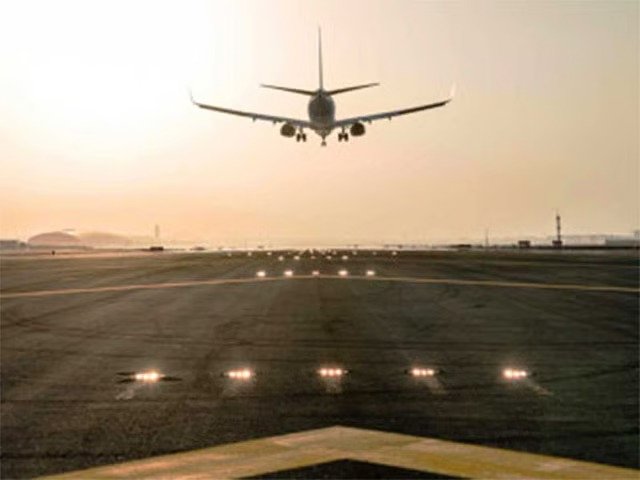
UAE Airports Cross 1 Billion Passengers in a Decade
<p><strong>Dubai:</strong> The UAE’s aviation sector has reached a historic milestone, surpassing <strong>one billion passengers</strong> at its airports over the past decade (2015–2024). According to the <strong>Federal Competitiveness and Statistics Centre</strong>, this achievement underscores the country’s rapid rise as a leading global aviation and tourism hub. During the same period, <strong>total aircraft movements exceeded 6.4 million</strong>, reflecting steady growth in air connectivity, trade, and tourism.</p><h3>Steady Rise in Passenger Traffic</h3><p>The data highlights a decade of consistent expansion. In 2015, UAE airports handled <strong>114.8 million passengers</strong>; by 2024, the figure rose to <strong>147.8 million</strong>, including arrivals, departures, and transit travelers. Aircraft activity mirrored this trend, with over <strong>800,000 movements</strong> recorded in 2024 alone. The growth demonstrates the UAE’s appeal across business, leisure, and transit segments, driven by its strategic location and strong airline network.</p><h3>Global Leadership in Aviation Quality</h3><p>The report also showcased the UAE’s <strong>top ranking in the global air transport quality index</strong>, reflecting high service standards, safety measures, and innovative airport operations. Additionally, the country secured <strong>top-ten positions worldwide in five other key aviation indicators</strong>, reinforcing its reputation as a leader in international travel and transport.</p><h3>Leadership and National Strategy</h3><p><strong>Abdullah bin Touq Al Marri</strong>, Minister of Economy and Tourism and Chairman of the <strong>General Civil Aviation Authority (GCAA)</strong>, attributed this success to the UAE’s visionary leadership and long-term strategies. He stated: <i>“These achievements reinforce the UAE’s standing on the global aviation and travel map and highlight the sector’s contribution to national economic growth and competitiveness.”</i> The aviation sector has been central to supporting tourism, trade, logistics, and broader economic diversification goals.</p><h3>Driving Innovation and Sustainability</h3><p>Beyond passenger and aircraft growth, the UAE has prioritized <strong>innovation, sustainability, and efficiency</strong> in its aviation ecosystem. The country has implemented advanced technologies in airport operations, adopted environmentally conscious practices, and integrated smart solutions for seamless passenger experiences. These measures have enhanced safety, customer satisfaction, and global investment in the nation’s aviation infrastructure.</p><h3>Economic and Tourism Impact</h3><p>The UAE’s aviation achievements are closely linked to its tourism and business ambitions. With <strong>Dubai and Abu Dhabi as major gateways</strong>, millions of visitors arrive annually for leisure, business, and international events. The sector has also boosted employment opportunities and contributed significantly to GDP, supporting economic diversification and reducing dependence on oil revenues.</p><h3>Looking Ahead</h3><p>Having served <strong>over one billion passengers</strong> in ten years, the UAE continues to expand. Authorities are focusing on <strong>enhancing connectivity</strong>, developing <strong>next-generation airport infrastructure</strong>, and adopting <strong>green aviation technologies</strong> to meet sustainability targets. The sector is also expected to play a key role in hosting <strong>large-scale international events</strong>, further cementing the UAE’s global position.</p><h3>Conclusion</h3><p>Crossing <strong>1 billion passengers</strong> and <strong>6.4 million aircraft movements</strong> in a decade highlights the UAE’s unmatched role in global aviation. Through strategic vision, innovation, and continuous investment, the country is not only a regional leader but also a benchmark for excellence in <strong>air travel, tourism, and economic competitiveness</strong>.</p>