
Munir Calls New Defence Forces HQ a Historic Step
Pakistan’s New Defence Forces Headquarters Marks Major Shift, Says Field Marshal Munir
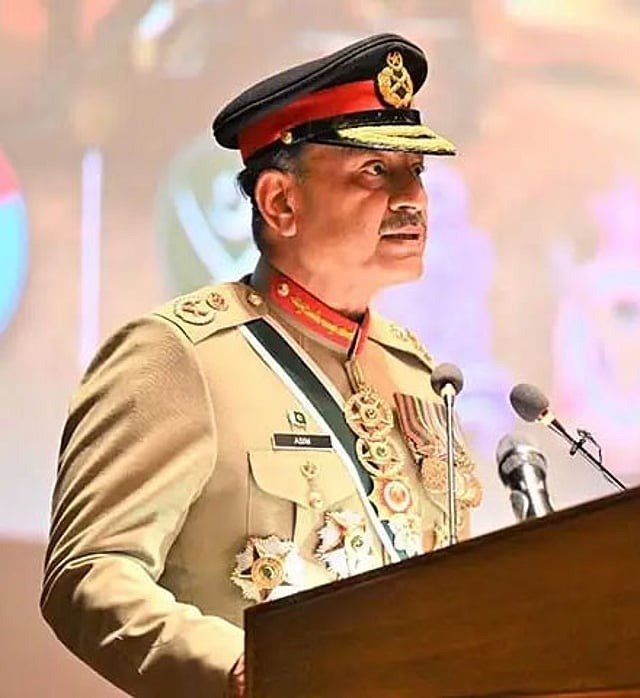
In his maiden public address as Pakistan’s first Chief of Defence Forces (CDF), Field Marshal Asim Munir described the establishment of the new Defence Forces Headquarters (DFHQ) as a “historic” and transformative step for the country’s military. Speaking at a formal ceremony held at the General Headquarters (GHQ) in Rawalpindi, Munir emphasised that the newly created structure would significantly strengthen coordination and operational harmony among Pakistan’s three armed services — the Army, Navy, and Air Force.
According to official statements released by the Inter-Services Public Relations (ISPR) and reports cited by Dawn, the creation of the DFHQ represents a crucial institutional reform aimed at modernising Pakistan’s defence architecture in response to evolving security challenges.
Strengthening Tri-Service Integration
Field Marshal Munir underlined that modern conflicts demand closer coordination across services, making a unified and formal framework for tri-services integration essential. He explained that while each military branch would retain its traditional identity, internal autonomy, and organisational structure, the DFHQ would focus on synchronising joint operations and ensuring unified strategic direction.
“The creation of the Defence Forces Headquarters is a vital move in this direction,” Munir said, noting that integrated command and planning are no longer an option but a necessity in today’s complex security environment. He reassured officers from all three services that this new structure would not undermine their independence but would instead enhance collective effectiveness and preparedness.
This assurance was also echoed by state broadcaster PTV News, which reported that the CDF made it clear that the Army, Navy, and Air Force would continue to function within their established operational frameworks while benefiting from stronger coordination at the strategic level.
Adapting to New Domains of Warfare
A key focus of Munir’s address was the rapidly evolving nature of modern warfare. He stressed that Pakistan must keep pace with emerging domains of conflict beyond conventional battlefields. These include cyberspace, the electromagnetic spectrum, space, information warfare, artificial intelligence, and quantum computing.
Munir warned that future conflicts are likely to be multi-dimensional, involving not just troops and weapons, but also data, networks, and advanced technologies. He emphasised that the armed forces must be prepared to operate effectively across all these domains through integrated planning and execution.
He further stated that strengthening multi-domain operations under a unified command would be essential for responding to changing regional and global security threats. The DFHQ, he explained, would play a central role in ensuring that Pakistan’s military remains agile, technologically relevant, and strategically aligned.
Security Outlook and Regional Concerns
Addressing broader security issues, Field Marshal Munir reiterated Pakistan’s longstanding position as a peace-loving nation. However, he made it clear that the country would not tolerate any challenge to its sovereignty or territorial integrity.
Referring specifically to Afghanistan, Munir revealed that a direct and clear message had been conveyed to the Taliban administration. According to him, Afghan authorities have been asked to choose decisively between supporting stability or allowing “khawarij mischief-makers” — a term often used by Pakistani officials to refer to militant elements — to operate against Pakistan’s interests.
His remarks reflected Islamabad’s continued concern over cross-border security threats and underscored the military’s readiness to respond firmly if required.
Vision for a Future-Ready Military
In his concluding remarks, as reported by Dawn, Field Marshal Munir shared a broader vision for Pakistan’s armed forces. He said the military must evolve into a “culturally futuristic, combat-ready force” capable of deterring aggression while enjoying the full confidence and trust of the nation.
“Let there be no doubt that the idea of Pakistan is invincible,” he stated, attributing national security to both the resolve of the armed forces and the unity of the Pakistani people. His message aimed to reinforce public confidence at a time of significant institutional change within the country’s defence leadership.
Guard of Honour and High-Level Attendance
Earlier in the day, Field Marshal Munir received a guard of honour at General Headquarters in Rawalpindi to formally mark his elevation to the post of Chief of Defence Forces. Contingents representing all three services — the Army, Navy, and Air Force — participated in the ceremony, symbolising unity and joint commitment.
Senior military leadership was also present, including Chief of Naval Staff Admiral Naveed Ashraf and Chief of the Air Staff Air Chief Marshal Zaheer Ahmad Babar. Their attendance highlighted the collective endorsement of the new leadership structure and the importance of tri-service cooperation.
A Defining Moment for Pakistan’s Military Structure
The appointment of Pakistan’s first Chief of Defence Forces and the establishment of the Defence Forces Headquarters represent one of the most significant reforms in the country’s military history. By prioritising integration, technological readiness, and unified command, Pakistan aims to better position its armed forces to meet both current and future security challenges.
Field Marshal Asim Munir’s first address as CDF made clear that while traditions and service identities will be preserved, the future of national defence lies in coordination, innovation, and adaptability — key elements in navigating an increasingly complex global security landscape.
Related News