
Trump–Xi Busan Talks: Breakthrough or Brief Breather?
Is the Trump–Xi Busan Breakthrough a Real Détente or Just a Pause?
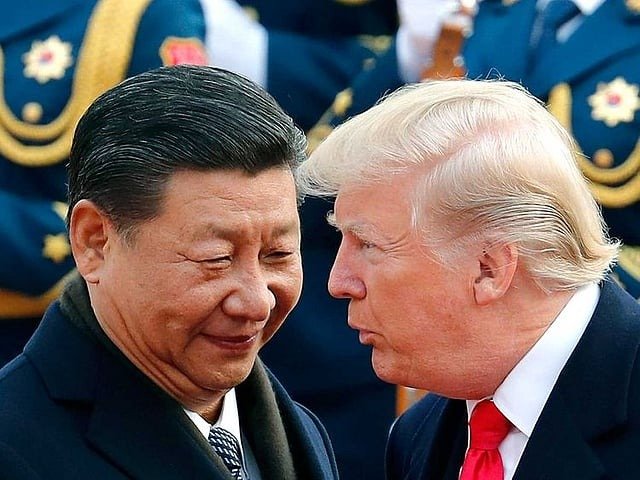
After years of mounting friction, the world watched closely as Donald Trump and Xi Jinping met in Busan for their first face-to-face talks since 2019. The meeting carried heavy symbolism: two leaders presiding over the world’s largest economies attempting to steady a relationship battered by trade wars, technology rivalry, and geopolitical mistrust.
The immediate outcomes looked promising. The two presidents announced agreements addressing sensitive issues that have long strained ties, notably the control of chemicals used to produce fentanyl and steps to ease China’s rare earth export process. These concessions signalled a willingness to compromise. Yet the central question remains: does Busan represent the beginning of a durable détente, or merely a tactical pause in an otherwise volatile rivalry?
What Was Agreed — and Why It Matters
The most headline-grabbing decision was China’s commitment to tighten controls on chemical precursors linked to fentanyl production — a synthetic opioid that has devastated communities across the United States. In return, Washington agreed to cut its so-called fentanyl-related tariff on Chinese imports from 20 per cent to 10 per cent, bringing overall tariffs on those goods down to 47 per cent. While still elevated, the move marked a rare rollback rather than an escalation.
Equally significant was Beijing’s agreement to ease procedures surrounding rare earth exports. These metals are essential for electronics, renewable energy technologies, and defence systems, making them a strategic choke point in global supply chains. For US industries dependent on stable access, even limited easing represents tangible relief and a sign that Beijing is willing to separate economic cooperation from political confrontation — at least for now.
A Change in Tone, If Not in Structure
Both leaders publicly emphasised the need to “manage and sustain” relations, a notable shift from the confrontational language that dominated recent years. Trump described the Busan talks as “a 12 out of 10,” while Xi underscored the long-term benefits of cooperation between two major powers.
They also agreed in principle to meet twice within the next year, reopening diplomatic channels that have often fallen silent during periods of tension. On the surface, this points to a renewed commitment to dialogue. However, history suggests that tone alone is not enough to guarantee stability.
The Weight of Recent Volatility
Scepticism about a lasting détente stems largely from recent experience. Trade relations between Washington and Beijing have been anything but predictable. In just the first half of 2025, US tariffs on China were altered multiple times, creating uncertainty for markets and undermining confidence in long-term agreements.
From Beijing’s perspective, this unpredictability reinforces the need for strategic self-reliance. Since the original trade war during Trump’s first term, China has doubled down on strengthening domestic champions and insulating key sectors from external pressure. These measures are not easily reversed and reflect a broader ambition to secure technological and industrial independence.
For Washington, accommodating China’s rise presents its own challenge. As China cements its role as the world’s largest merchandise exporter, the US remains determined to preserve its influence over global trade rules, technology standards, and strategic supply chains. These competing ambitions place natural limits on how far any détente can go.
Strategic Rivalry Still Looms
Beyond tariffs and exports lies a deeper contest over leadership in the global system. Even as Trump and Xi outlined a framework for future trade negotiations and cooperation in areas such as energy and commerce, fundamental differences remain unresolved. Mutual suspicion, divergent political systems, and regional flashpoints continue to shape policies on both sides.
This context makes it difficult to see the Busan agreement as a comprehensive reset. Instead, it appears more like a stabilisation effort — an attempt to prevent rivalry from spiralling into outright economic or diplomatic crisis.
A Promising Start, Not a Final Settlement
None of this diminishes the significance of the Busan meeting. After years of acrimony, even limited agreements represent progress. By addressing fentanyl controls and rare earth access, both sides demonstrated that cooperation is still possible when interests align. More importantly, they signalled a shared recognition that unmanaged confrontation carries high costs for both economies and the wider world.
Looking ahead, attention will turn to upcoming global forums, including China hosting APEC and the United States hosting the G20 in 2026. These gatherings could test whether the spirit of Busan evolves into deeper, more institutionalised cooperation.
For now, the Trump–Xi breakthrough sits in an uncomfortable middle ground: more than symbolism, less than a settlement. It may not yet be a true détente, but it is a meaningful pause — and possibly the first step toward a more stable, if still competitive, US–China relationship.
Related News